
Unlocking Top Talent: Cost-Effective Strategies for 2025
Finding top talent while controlling recruitment costs is a challenge. This listicle presents seven cost-effective recruitment strategies to help you attract and secure the best candidates in 2025. Whether you're a startup, SMB, or enterprise, these proven methods will maximize your hiring ROI. Learn how to optimize your recruitment process using strategies like employee referrals, social media recruiting, and job board optimization, among others. Discover how to build a strong talent pipeline without breaking the bank.
1. Employee Referral Programs
Employee referral programs are a cost-effective recruitment strategy that leverages your existing workforce’s network to find qualified candidates. Essentially, current employees recommend people from their professional and personal circles who they believe would be a good fit for open positions. This method taps into a valuable pool of talent often unavailable through traditional job boards or recruiting agencies. In exchange for successful referrals, employees typically receive incentives, which can be monetary bonuses, extra vacation days, gift cards, or other perks. Why does this method deserve its place on a list of cost-effective recruitment strategies? It consistently delivers high-quality candidates at a fraction of the cost of traditional methods, offering a significant return on investment for businesses of all sizes.
Employee referral programs work by establishing a clear process where employees can easily submit referrals. This often involves a dedicated platform or system, sometimes integrated with the company's Applicant Tracking System (ATS). Referrals are then vetted by HR, often with input from the referring employee. The inherent benefit of this system is the pre-screening done by the employee, who can vouch for the candidate's skills, experience, and potential cultural fit. This pre-vetting significantly reduces the time and resources spent sifting through applications from less-qualified candidates.
Numerous companies have demonstrated the effectiveness of employee referral programs. Google, for example, attributes nearly 50% of its hires to employee referrals. Salesforce offers referral bonuses up to $5,000 and enjoys high success rates with this strategy. Accenture’s 'Refer a Friend' program and Ernst & Young’s gamified referral program have also generated thousands of quality hires, highlighting the broad applicability of this approach across various industries.
This approach is particularly useful for early-stage startups and SMEs looking to scale quickly without breaking the bank on recruitment costs. It's also highly beneficial for enterprise companies seeking specific expertise or cultural fits and HR professionals aiming to streamline their hiring process. Sales leaders building remote sales teams can particularly benefit from employee referrals, as trusted recommendations can quickly yield high-performing individuals with established networks.
Several features contribute to the effectiveness of employee referral programs: an incentive-based system, a streamlined referral process, quality screening through employee judgment, a built-in cultural fit assessment, and significantly reduced time-to-hire. These features translate into tangible benefits, including lower cost-per-hire (typically 3-5x less expensive than external recruiting), higher quality candidates who are a better cultural fit, a faster hiring process, improved employee engagement and retention (as employees are invested in the success of their referrals), and access to passive candidates not actively job searching.
However, employee referral programs are not without potential drawbacks. Over-reliance on referrals can lead to a homogeneous workforce, lacking diversity. There’s also the risk of nepotism or bias in referrals. If employee networks are similar, the reach of the program might be limited. Internal politics or favoritism issues can also arise. Finally, referral bonuses can become an expected perk rather than a motivator.
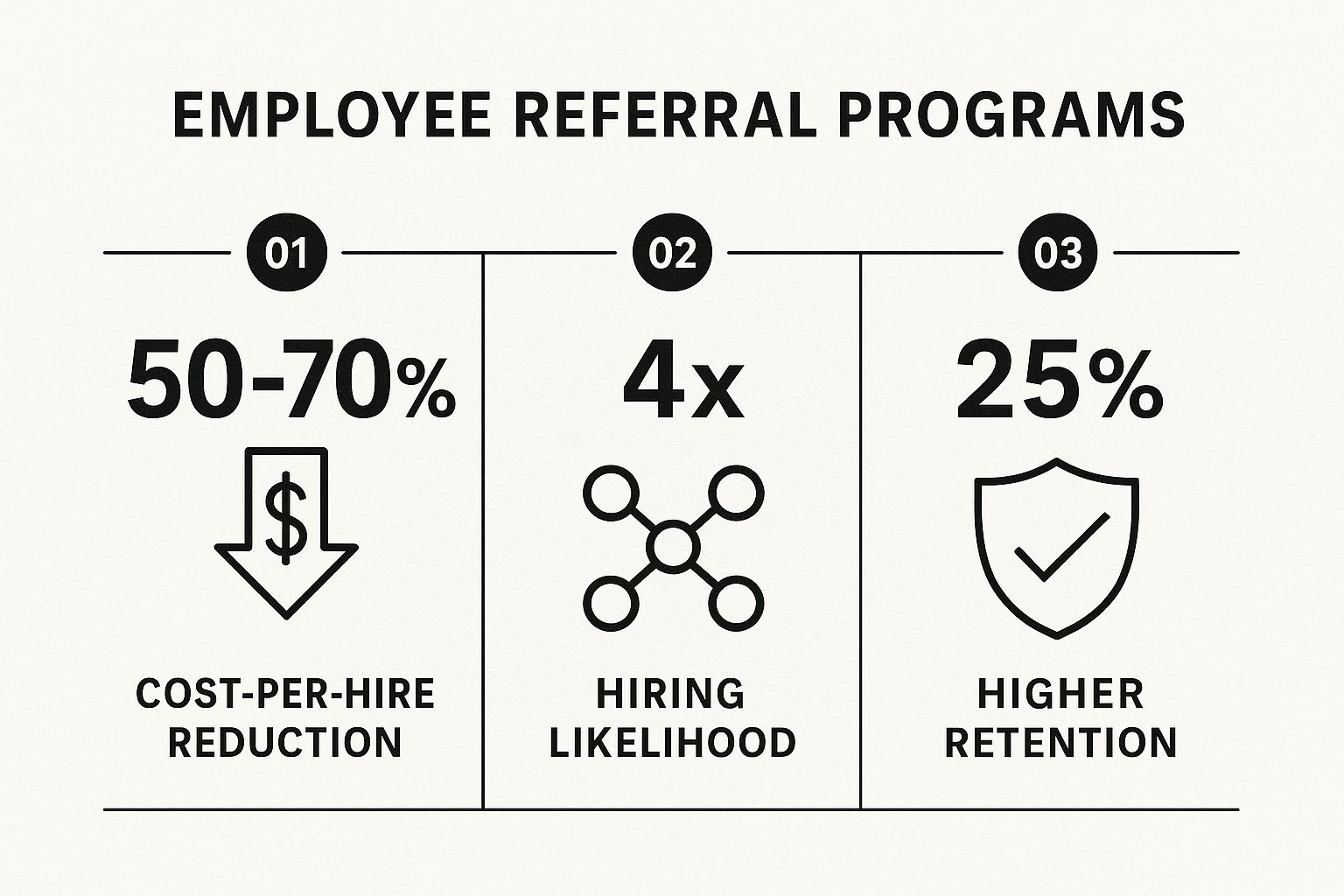
The infographic above visualizes key data points showcasing the effectiveness of employee referral programs: cost-per-hire reduction, hiring likelihood, and employee retention.
These impressive numbers underscore the power of leveraging internal networks. A 50-70% reduction in cost-per-hire represents significant savings, particularly for rapidly scaling businesses. The 4x increase in hiring likelihood demonstrates the effectiveness of referrals compared to traditional methods. The 25% boost in retention highlights the long-term benefits of bringing in culturally aligned candidates through referrals.
To maximize the success of your employee referral program, consider the following tips:
- Establish clear guidelines: Define what constitutes a qualified referral to ensure alignment with job requirements.
- Tiered bonuses: Offer different bonus levels based on the role's difficulty or seniority.
- User-friendly platform: Provide an easy-to-use platform or mobile app for submitting referrals.
- Track and communicate success: Share success stories to keep the program top-of-mind and motivate employees.
- Promote diversity: Include diversity goals and incentives within the program to build a more representative workforce.
- Delayed bonus payout: Pay referral bonuses after the new hire completes their probationary period to ensure a good fit.
By implementing these best practices, you can harness the power of employee referrals to build a strong, engaged, and high-performing team while significantly reducing recruitment costs. This makes employee referral programs a highly effective and cost-efficient recruitment strategy.
2. Social Media Recruiting
Social media recruiting is a cost-effective recruitment strategy that leverages the power of social media platforms like LinkedIn, Facebook, Twitter, Instagram, and even TikTok to find, attract, and engage potential candidates. This approach involves a two-pronged strategy: active sourcing, where recruiters directly search for and contact potential candidates, and building a strong employer brand to organically attract passive candidates who might not be actively looking for a new job. It’s a powerful tool for businesses of all sizes, from early-stage startups to enterprise companies, looking to expand their talent pool and reduce hiring costs.

This method works by creating a multi-platform presence across various social networks, allowing businesses to tap into diverse talent pools. Targeted advertising and sponsored content capabilities enable precise targeting of specific demographics and skill sets, ensuring your message reaches the right audience. Direct messaging features facilitate real-time engagement with potential candidates, significantly speeding up the recruitment process. Furthermore, consistent content sharing builds a strong employer brand, attracting passive candidates and establishing your company as a desirable place to work. This helps develop a community around your brand and nurture a talent pool for future hiring needs. This is particularly relevant for cost effective recruitment strategies because it significantly reduces reliance on expensive traditional advertising methods.
Social media recruiting offers several advantages. It provides access to vast talent pools, including passive candidates who might not be actively searching on job boards. Compared to traditional advertising, it is significantly more cost-effective. The ability to target specific demographics and skill sets minimizes wasted ad spend, focusing your efforts on the most qualified candidates. Real-time engagement and faster response times accelerate the hiring process, crucial for businesses seeking to scale rapidly. Finally, consistent engagement builds long-term employer brand awareness, enhancing your company's reputation and attracting top talent.
Examples of successful social media recruiting abound. IBM uses LinkedIn to target AI and cloud computing professionals, reporting a 40% hiring success rate. Starbucks leverages Instagram to attract young retail workers with lifestyle-focused content, resonating with their target demographic. HubSpot’s Twitter recruitment campaigns have successfully filled dozens of tech roles. Even McDonald's has tapped into the power of TikTok, running campaigns that successfully recruited Gen Z workers during periods of labor shortages. These examples highlight the versatility of social media recruiting across various industries and demographics.
However, social media recruiting isn’t without its challenges. It can be time-intensive, requiring consistent content creation and management across multiple platforms. Changes in platform algorithms can impact organic reach, necessitating ongoing adaptation. Measuring ROI and conversion rates can be difficult, requiring careful tracking and analysis. There's also the risk of negative public feedback or reviews, which can damage your employer brand. Finally, effective social media recruiting often requires dedicated social media expertise.
To maximize your success with social media recruiting, consider the following tips:
- Tailor your content and approach: Each platform has a unique audience and culture. What works on LinkedIn might not resonate on Instagram.
- Use employee advocates: Encourage your employees to share authentic workplace content. This builds trust and provides potential candidates with an inside look at your company culture.
- Invest in social media management tools: These tools can streamline your efforts, allowing you to schedule posts, track performance, and engage with your audience more efficiently.
- Engage with industry communities and groups: Participate in relevant online discussions and groups to connect with potential candidates and establish your company as a thought leader.
- Track metrics: Monitor engagement rates, click-throughs, and applications to measure the effectiveness of your campaigns and identify areas for improvement.
- Respond promptly: Engage with comments and direct messages promptly and professionally. This demonstrates your responsiveness and builds positive relationships with potential candidates.
Companies like LinkedIn, with its focus on professional networking, have popularized social media recruiting. Others like Buffer and HubSpot have developed best practices for leveraging social media for recruitment. Glassdoor integrates employer branding into its platform, allowing companies to showcase their culture and values to potential candidates. Learn more about Social Media Recruiting and explore further best practices.
Social media recruiting deserves its place on the list of cost-effective recruitment strategies because it offers a powerful and versatile approach to finding and attracting talent. By strategically leveraging the reach and engagement capabilities of social media platforms, businesses can significantly reduce hiring costs, accelerate the recruitment process, and build a strong employer brand. This makes it an essential tool for any organization looking to compete in today’s competitive talent market.
3. University and College Partnerships
University and college partnerships represent a highly cost-effective recruitment strategy, particularly for businesses seeking entry-level talent and looking to build a long-term talent pipeline. This approach involves establishing strategic relationships with educational institutions to access a pool of skilled graduates and undergraduates through various programs like internships, career fairs, campus recruiting events, and co-op programs. This proactive engagement allows companies to cultivate relationships with potential candidates early on, fostering strong employer branding and securing a steady stream of qualified individuals. This method stands as a valuable cost-effective recruitment strategy due to the potential for lower initial salary expectations, the opportunity to assess candidates through internships, and the long-term talent pipeline development it provides. For startups and growing businesses, accessing this talent pool can be crucial for scaling operations without breaking the bank.

This strategy works by creating a mutually beneficial relationship between the company and the educational institution. Companies gain access to a large pool of potential candidates, while universities can offer their students valuable practical experience and career opportunities. This collaboration takes various forms, including:
- On-campus recruiting events and career fairs: These events provide direct interaction with students and recent graduates actively seeking employment.
- Internship and co-op program development: These programs offer students hands-on experience in their chosen field, allowing companies to evaluate potential hires before offering full-time positions. This is particularly beneficial for assessing soft skills and cultural fit, ultimately reducing costly mis-hires.
- Guest lectures and curriculum involvement: Engaging with students through guest lectures and curriculum development helps establish the company as an industry leader and attracts top talent.
- Scholarship and mentorship programs: These initiatives demonstrate a commitment to student development and create a positive brand image among students, increasing the likelihood of attracting top graduates.
- Alumni network engagement: Leveraging the existing alumni network within a company can be a powerful tool for referrals and attracting talent from their alma mater.
Many successful companies have demonstrated the efficacy of university and college partnerships. Microsoft, for example, hires over 1,500 graduates annually through its university recruiting program. Deloitte partners with over 100 universities globally for campus recruiting, building relationships with future talent across various disciplines. General Electric's Edison Engineering program strategically recruits from top engineering schools, ensuring a steady stream of highly skilled engineers. JPMorgan Chase's Code for Good hackathons, held at universities, effectively attract top-tier tech talent by offering engaging challenges and networking opportunities.
To maximize the effectiveness of university partnerships as a cost-effective recruitment strategy, consider the following actionable tips:
- Focus on schools with strong programs in your industry: Targeting specific universities known for their relevant programs ensures access to candidates with the desired skill sets.
- Offer meaningful internship experiences: Instead of relegating interns to administrative tasks, provide challenging projects that contribute to the company's goals and allow interns to develop valuable skills. This increases the likelihood of converting interns to full-time employees, significantly reducing long-term recruitment costs.
- Participate in multiple recruiting events throughout the academic year: Consistent presence on campus reinforces your brand and keeps your company top-of-mind for students.
- Build relationships with career services offices and faculty: Cultivating these relationships provides valuable insights into student talent and facilitates access to promising candidates.
- Create compelling employer value propositions for students: Highlighting company culture, growth opportunities, and employee benefits attracts students seeking long-term career prospects.
- Use alumni employees as campus recruiting ambassadors: Leveraging alumni connections creates a sense of authenticity and strengthens your company's appeal to potential recruits.
While this approach offers numerous advantages, it is crucial to acknowledge the potential drawbacks. University and college partnerships primarily focus on entry-level positions, limiting its usefulness for senior roles. Competition from other employers can be fierce, requiring a proactive and compelling recruitment strategy. Building and maintaining these relationships requires long-term commitment and resources. Finally, seasonal hiring cycles may not align with business needs, requiring flexibility in onboarding and training schedules. Despite these challenges, the potential for long-term cost savings and access to a consistent pipeline of emerging talent makes university and college partnerships a valuable component of a comprehensive and cost-effective recruitment strategy.
4. Job Board Optimization
In today's competitive hiring landscape, finding the right talent efficiently is crucial, especially for budget-conscious businesses. Job board optimization offers a cost-effective recruitment strategy, allowing you to leverage both free and paid job posting platforms to maximize your reach and attract qualified candidates without breaking the bank. This involves strategically crafting job descriptions, selecting the appropriate platforms, and timing your posts for optimal visibility. By understanding the nuances of job board optimization, you can significantly improve your recruitment efforts and secure top talent.

Job board optimization involves a multi-pronged approach. It starts with crafting compelling and SEO-optimized job descriptions that accurately reflect the role’s requirements and appeal to the target audience. This means incorporating relevant keywords that candidates are likely to search for, highlighting key responsibilities and benefits, and using clear, concise language. Choosing the right platforms is equally critical. While general job boards like Indeed offer a broad reach, niche platforms like Dice (for tech roles) or industry-specific boards can connect you with a more targeted pool of candidates. Finally, timing is everything. Research suggests that posting jobs on Tuesday-Thursday often yields maximum visibility.
This approach deserves a prominent place in any cost-effective recruitment strategy list due to its flexibility and measurable impact. It caters to various budgets, with options ranging from free job postings to cost-per-click (CPC) and premium placement options on paid platforms. This allows businesses to control their spending and scale their efforts as needed. Furthermore, the analytics and performance tracking tools offered by many platforms provide valuable insights into the effectiveness of your postings, enabling data-driven optimization and clear ROI measurement.
The benefits of job board optimization are numerous. It provides wide reach across multiple candidate segments, ensuring your job openings are visible 24/7. The measurable results and clear ROI tracking allow you to fine-tune your strategies for optimal performance. Flexible budgeting with various pricing models caters to businesses of all sizes, from startups to enterprises. Furthermore, integration with Applicant Tracking Systems (ATS) streamlines the application process and improves efficiency.
However, job board optimization also presents certain challenges. The high competition for candidate attention requires continuous optimization and monitoring of your postings. There's a potential for a high volume of unqualified applicants, necessitating careful screening. Costs can escalate quickly, particularly on premium platforms. Finally, each platform has its own learning curve and specific requirements, demanding time and effort to master.
Examples of successful job board optimization abound. Indeed's sponsored job postings have been shown to increase applications by 300%, demonstrating the power of paid promotion. Stack Overflow Jobs effectively targets software developers, boasting a 90% relevance rate for applications. For companies with strong employer brands, Glassdoor integration can lead to a 25% increase in applications. Finally, niche job boards like Dice consistently demonstrate higher conversion rates for tech roles compared to general job boards.
To maximize your success with job board optimization, consider the following actionable tips:
- Use clear, specific job titles: Avoid jargon and internal company terminology. Use job titles that candidates actually search for.
- Include salary ranges: Transparency attracts serious candidates and saves time filtering out those with mismatched salary expectations.
- Optimize job descriptions with relevant keywords: Conduct keyword research to identify the terms candidates use when searching for similar roles.
- Post jobs on Tuesday-Thursday: Studies suggest these days generally see the highest traffic on job boards.
- Use A/B testing for job titles and descriptions: Experiment with different variations to see what resonates best with your target audience.
- Monitor and adjust posting frequency: Based on application volume, adjust how often you repost your jobs to maintain optimal visibility.
Job board optimization is a powerful tool for any organization looking to recruit efficiently and cost-effectively. By strategically leveraging both free and paid platforms, crafting compelling job descriptions, and continuously optimizing your approach, you can significantly improve your recruitment outcomes and build a strong talent pipeline. Whether you're a startup, SMB, or enterprise, job board optimization offers a flexible and scalable solution for attracting top talent in today's competitive market.
5. Internal Mobility and Succession Planning
Internal mobility and succession planning represent one of the most cost-effective recruitment strategies available, particularly for growing businesses. This approach prioritizes promoting and laterally moving existing employees to fill open positions before looking externally. By investing in your current workforce and creating clear career paths, you significantly reduce the need for costly external hires, while simultaneously boosting employee engagement and retention. This method is a crucial component of any cost-effective recruitment strategy, saving valuable time and resources.
Instead of starting the recruitment process from scratch each time a position opens up, internal mobility encourages you to first look within your existing talent pool. This involves actively developing your current employees through training, mentoring, and providing opportunities for them to expand their skillsets and take on new challenges. This proactive approach cultivates a strong internal talent pipeline, reducing your reliance on external recruitment agencies and job boards. It also contributes to a more engaged and motivated workforce, as employees see a clear path for growth and development within the company.
The core of internal mobility and succession planning lies in creating a structured system. This typically includes internal job posting systems, which provide transparency and allow all employees to see and apply for available opportunities. Coupled with this are robust skills assessment and gap analysis processes to identify areas where employees may need further development to qualify for desired roles. Professional development programs, mentorship and coaching initiatives, and succession planning, particularly for key roles, are critical for building a strong internal bench strength.
Numerous companies have successfully implemented internal mobility programs, reaping significant benefits. General Electric's renowned leadership development programs have historically filled 90% of executive roles internally. Marriott International promotes 50% of management positions from within, fostering a culture of growth and loyalty. McDonald's Hamburger University is another prime example, having developed thousands of internal leaders over the years. Even tech giants like IBM leverage internal mobility, with their program moving approximately 30% of employees to new roles annually. These examples demonstrate the effectiveness and scalability of internal mobility across diverse industries.
Several advantages make internal mobility a cornerstone of cost-effective recruitment strategies:
- Significantly lower recruitment and onboarding costs: Eliminating the need for external recruitment agencies, job postings, and extensive onboarding processes translates into substantial cost savings.
- Shorter time-to-productivity: Promoted employees are already familiar with the company culture, processes, and systems, leading to faster integration and contribution in their new roles.
- Improved employee retention and engagement: Providing clear career progression opportunities increases employee loyalty and motivation, reducing costly turnover.
- Preserved institutional knowledge: Promoting from within retains valuable company-specific knowledge and experience.
- Enhanced employer brand and culture: A strong internal mobility program strengthens your employer brand, attracting and retaining top talent.
However, it's essential to also acknowledge the potential downsides:
- Limited external perspectives and fresh ideas: Relying solely on internal hires can limit the influx of new perspectives and innovative thinking.
- Potential skills gaps: Internal talent may sometimes lack the specific expertise required for certain roles.
- Potential for internal conflict: If not managed carefully, internal promotions can sometimes lead to resentment among non-promoted employees.
- Investment in training and development: Effective internal mobility requires ongoing investment in training and development programs.
- Risk of promoting beyond competence: There's always a risk of promoting individuals beyond their current capabilities.
To successfully implement an internal mobility and succession planning strategy, consider these actionable tips:
- Create transparent internal job posting processes: Ensure all employees have equal access to internal opportunities.
- Invest in comprehensive skills assessment tools: Identify employee strengths and development needs.
- Provide clear career progression roadmaps: Give employees a clear understanding of growth opportunities within the company.
- Offer cross-functional training opportunities: Encourage employees to develop skills in different areas of the business.
- Implement mentorship programs pairing senior and junior staff: Facilitate knowledge transfer and skill development.
- Track internal mobility metrics and success rates: Measure the effectiveness of your program and identify areas for improvement.
Learn more about Internal Mobility and Succession Planning
When considering cost-effective recruitment strategies, especially for early-stage startups, SMEs aiming to reduce hiring costs, or larger enterprises looking to streamline talent management, internal mobility and succession planning should be a top priority. By fostering a culture of internal growth and development, you can not only save money but also build a more engaged, motivated, and productive workforce. This strategy is particularly valuable for HR and talent acquisition professionals and sales leaders seeking to build high-performing teams while minimizing recruitment expenses.
6. Networking and Industry Events: A Cost-Effective Recruitment Strategy
For businesses seeking cost-effective recruitment strategies, particularly those targeting niche talent pools, networking and industry events offer a powerful approach. While job boards and recruitment agencies can drain your budget, strategically leveraging industry events can connect you with high-quality candidates and build a robust talent pipeline, all while enhancing your company’s visibility. This method deserves a place on any cost-effective recruitment strategy list due to its potential for high ROI when executed effectively.
Networking and industry events encompass a range of activities, from attending conferences and trade shows to participating in local meetups and professional association gatherings. This relationship-based approach focuses on building long-term connections with potential candidates rather than solely addressing immediate hiring needs. By actively engaging within your industry's ecosystem, you position your company as an employer of choice and cultivate relationships with passive candidates – individuals who might not be actively searching for a new role but could be enticed by the right opportunity.
How it Works:
This recruitment strategy hinges on building genuine relationships. It's not about handing out business cards and hoping for the best. Instead, it requires engaging in meaningful conversations, understanding individuals' career aspirations, and showcasing your company culture and values. This allows you to pre-qualify potential candidates and gauge their fit within your organization before even initiating a formal application process. Features of this strategy include:
- Industry Conference Participation and Sponsorship: Attending conferences offers numerous networking opportunities, from formal sessions to informal social events. Sponsoring conferences elevates your brand visibility and provides additional avenues for candidate engagement.
- Local Professional Meetup Attendance: Meetups are a more intimate setting to connect with professionals in your specific field. Regular attendance demonstrates your commitment to the industry and provides consistent networking opportunities.
- Trade Show Recruitment Booths: Trade shows offer a targeted platform to interact with potential candidates actively involved in your industry. A well-designed booth can attract talent and facilitate meaningful conversations.
- Professional Association Memberships: Joining and actively participating in professional associations connects you with a network of industry professionals and often includes access to member directories and exclusive events.
- Networking Event Hosting and Organization: Organizing your own industry meetups or workshops positions your company as a thought leader and attracts talent seeking professional development opportunities.
Successful Examples:
Several companies have successfully employed networking and industry events as a core recruitment strategy:
- Salesforce: Their annual Dreamforce conference, while primarily a customer-focused event, doubles as a massive recruiting opportunity, resulting in over 1000 hires in some years.
- Google: Google's consistent presence at tech meetups has been instrumental in sourcing hundreds of engineering candidates.
- Consulting Firms: Major consulting firms actively recruit at MBA networking events and alumni gatherings, targeting top-tier graduates.
- Healthcare Companies: Medical conference networking sessions provide a fertile ground for healthcare companies to connect with specialized medical professionals.
Actionable Tips for Effective Networking:
- Set Specific Goals: Before attending any event, define your networking objectives. Are you looking for specific skill sets? Are you aiming to build brand awareness within a particular talent pool?
- Train Employees on Effective Networking Techniques: Equip your team with the skills to engage in meaningful conversations, represent your company effectively, and gather relevant information from potential candidates.
- Follow Up Promptly: Within 48 hours of meeting a potential candidate, follow up with a personalized message referencing your conversation and expressing your interest.
- Host Your Own Events: Organize industry meetups or workshops to attract talent and position your company as a thought leader.
- Utilize CRM Systems: Track networking contacts and interactions to build a comprehensive talent pipeline and facilitate personalized follow-up.
- Give Value First: Focus on building genuine relationships and providing value to potential candidates before asking for referrals or applications.
Pros and Cons:
Pros:
- Access to high-quality, passive candidates
- Ability to assess candidates in professional settings
- Cost-effective compared to recruiting agencies
- Builds long-term talent relationships
- Enhances company visibility and employer brand
Cons:
- Time-intensive relationship building process
- Irregular and unpredictable hiring outcomes
- Requires significant travel and event investment
- Limited to specific industries and geographic areas
- Difficulty tracking ROI and conversion metrics
Despite the potential drawbacks, the benefits of networking and industry events as a cost-effective recruitment strategy are undeniable. By investing time and effort in building genuine relationships and strategically engaging within your industry's ecosystem, you can create a sustainable talent pipeline and significantly reduce your reliance on expensive recruitment agencies, making it an ideal strategy for cost-conscious businesses looking to expand their teams effectively.
7. Freelancer-to-Full-Time Conversion
Freelancer-to-full-time conversion is a cost-effective recruitment strategy that involves hiring freelancers or contractors for project-based work with the potential for them to transition into permanent roles. This "try before you buy" approach allows companies to evaluate a candidate's skills, work ethic, and cultural fit within a real-world setting before making a long-term commitment. It's particularly relevant for early-stage startups, small and medium-sized businesses, and even enterprise companies looking for cost-effective ways to expand their workforce and access specialized talent. This strategy offers a blend of flexibility and cost savings, making it a valuable addition to any recruitment toolkit. It’s a powerful tool within the broader spectrum of cost-effective recruitment strategies, allowing you to minimize financial risk while maximizing the potential for finding the perfect fit.
This approach offers several advantages over traditional hiring methods. Firstly, it significantly reduces hiring risk. By observing a freelancer's performance over an extended period, you gain a much clearer understanding of their capabilities and whether they align with your company's needs and culture. This is far more insightful than relying solely on resumes and interviews. Secondly, this method allows for immediate productivity. Freelancers can be quickly onboarded and begin contributing to projects without the lengthy processes associated with traditional hires. This is particularly beneficial for time-sensitive projects or when filling a sudden skills gap. Thirdly, it provides access to specialized skills for specific projects. Instead of hiring a full-time employee for a short-term need, you can engage a freelancer with the exact expertise required, saving on long-term salary and benefits costs. This flexibility to scale your workforce up or down makes it a highly adaptable recruitment strategy, allowing you to respond effectively to changing market demands. Finally, the initial financial commitment is considerably lower than hiring a full-time employee from the outset.
Several companies have successfully implemented freelancer-to-full-time conversion strategies. Automattic, the company behind WordPress, is a prime example, hiring approximately 70% of its employees after successful freelance trial periods. Similarly, Buffer converts about 30% of its contractors to full-time employees. Toptal's freelancer-first hiring model has also inspired many companies to adopt this approach, demonstrating its efficacy in sourcing and securing top talent. Even GitLab, with its all-remote model, utilizes freelancer-to-employee conversions extensively. These real-world examples highlight the effectiveness of this strategy across diverse company structures and industries.
To effectively implement this cost-effective recruitment strategy, consider the following tips:
-
Set Clear Expectations: From the initial engagement, clearly communicate the potential for full-time conversion. This attracts freelancers genuinely interested in long-term opportunities and sets the stage for a mutually beneficial relationship.
-
Competitive Rates: Offer competitive freelance rates to attract high-quality professionals. This demonstrates your value for their skills and increases the likelihood of attracting top talent interested in conversion opportunities.
-
Cultural Integration: Include freelancers in team meetings, company-wide communications, and even social activities to foster a sense of belonging and assess their cultural fit.
-
Formal Evaluation: Establish formal evaluation criteria for conversion decisions. This provides transparency and ensures consistent assessment across all freelance candidates.
-
Legal Compliance: Ensure legal compliance with contractor classification rules to avoid potential legal issues down the line.
-
Attractive Benefits: Offer compelling employee benefits packages for converted freelancers to incentivize the transition and retain valuable talent.
While this approach offers many advantages, it's important to acknowledge potential drawbacks. Hourly costs for freelancers can be higher than salary equivalents for full-time employees. There's also the potential for legal and classification issues if contractor relationships are not managed correctly. Additionally, freelancers might have limited loyalty and long-term commitment, especially if they're juggling multiple clients. Integrating contractors into company culture can also be challenging, especially in remote work environments. Finally, competition from other clients for a freelancer’s time can be a concern, especially for highly sought-after skills.
Despite these challenges, the benefits of freelancer-to-full-time conversion, especially as a cost-effective recruitment strategy, often outweigh the risks. By carefully planning your approach, setting clear expectations, and actively managing the freelancer relationship, you can significantly increase your chances of finding and retaining top talent while minimizing hiring costs. Learn more about Freelancer-to-Full-Time Conversion
Cost-Effective Recruitment Strategies Comparison
| Strategy | Implementation Complexity 🔄 | Resource Requirements ⚡ | Expected Outcomes 📊 | Ideal Use Cases 💡 | Key Advantages ⭐ |
|---|---|---|---|---|---|
| Employee Referral Programs | Moderate – needs referral platform and policy setup | Moderate – incentives, platform maintenance | High quality hires, 50-70% cost reduction, faster hiring | Mid to large companies seeking quality cultural fits | Lower cost per hire, faster hiring, better retention |
| Social Media Recruiting | High – ongoing content creation and platform management | High – dedicated social media expertise and tools | Broad candidate reach, strong employer brand development | Companies targeting passive candidates and diverse pools | Access to vast talent, targeted ads, real-time engagement |
| University and College Partnerships | High – long-term relationship building and event planning | Moderate to high – events, internships, brand efforts | Pipeline of entry-level talent, strong brand among students | Organizations hiring entry-level or internship candidates | Early talent access, long-term pipeline, employer branding |
| Job Board Optimization | Moderate – requires SEO, platform knowledge, and analytics | Moderate – budget for paid posts, monitoring tools | Increased visibility, measurable ROI, 24/7 job presence | Companies needing broad reach and measurable recruiting | Wide reach, flexible budget, clear ROI tracking |
| Internal Mobility and Succession Planning | High – skill assessments and development programs | High – training, mentoring, career path resources | Lower hiring costs, higher retention, faster productivity | Companies focusing on talent retention and internal growth | Cost-efficient, boosts retention, preserves knowledge |
| Networking and Industry Events | High – event participation and relationship management | Moderate to high – event costs, travel, CRM systems | Long-term passive talent pipeline, enhanced employer brand | Industries relying on personal connections and passive talent | Access to passive candidates, strong relationships |
| Freelancer-to-Full-Time Conversion | Moderate – set evaluation criteria and integration process | Moderate – freelance rates and assessment tools | Reduced hiring risk, flexible workforce scaling | Project-based roles with potential for permanent hiring | Lower initial commitment, access to specialized skills |
Elevate Your Recruitment: Making Cost-Effective Strategies Work for You
In today's competitive talent market, implementing cost-effective recruitment strategies is no longer a luxury but a necessity. We've explored several powerful approaches, from leveraging employee referral programs and optimizing your job board presence to fostering internal mobility and exploring the potential of freelancer-to-full-time conversions. Remember, the key takeaways here are to diversify your recruitment channels, engage proactively with potential candidates, and continuously refine your approach based on your unique needs. Mastering these cost-effective recruitment strategies will not only significantly reduce your hiring expenses but also improve the quality of your hires and accelerate your time-to-fill. This translates to a stronger team, faster growth, and a more robust bottom line.
To maximize the effectiveness of your outreach and attract the best talent, consider your broader talent acquisition strategy. A robust pipeline is essential for any successful recruiting process. To further enhance your recruitment strategies and attract top-tier candidates, consider exploring these lead generation best practices from PlusVibe's guide, "10 Lead Generation Best Practices for 2025". By combining smart lead generation with the cost-effective recruitment strategies outlined above, you can create a powerful talent acquisition engine.
Looking for a streamlined and even more cost-effective solution, particularly for remote sales talent in Latin America and Europe? AboutHire offers pre-vetted candidates, a rapid onboarding process, and potential cost savings of up to 70% compared to traditional U.S.-based hiring. Explore how AboutHire can help you achieve your sales goals and build a world-class remote team.