Understanding What Account Managers Really Do

Let's move beyond the jargon and explore the everyday work of an Account Manager. They're not just processing orders; they're the strategic architects of client relationships. They bridge the gap between what clients need and the solutions a company offers. The role has changed significantly, moving beyond sales into a more complex mix of psychology, strategic thinking, and problem-solving. This shift has led companies to invest heavily in skilled Account Managers, recognizing their importance in building lasting partnerships that drive sustainable growth.
Building Bridges, Not Just Taking Orders
Today’s Account Manager cultivates long-term relationships. This means truly understanding each client's unique business, anticipating future needs, and proactively presenting solutions that align with their broader goals. Instead of simply processing an order, a skilled Account Manager might identify untapped growth opportunities within the client's organization. They might then propose customized strategies to capitalize on those opportunities, transforming the Account Manager's role from a reactive service provider to a trusted advisor.
The Evolving Account Manager Job Description
The very definition of an account manager job description has shifted. It's no longer just about maintaining existing accounts; it's about strategic growth. Account Managers need a thorough understanding of their company’s offerings and the ability to connect those offerings with specific client needs. They also act as a liaison between internal departments, ensuring smooth communication and coordinated efforts to meet (and exceed) client expectations. This coordination is key for maximizing client satisfaction and building those all-important long-term relationships. The role is critical for ensuring client satisfaction and nurturing long-term customer relationships by understanding client needs and ensuring those needs are met through internal coordination. Explore this topic further
The Strategic Mindset of a Top Performer
Exceptional Account Managers stand out because of their strategic mindset. They see client relationships as valuable assets that require ongoing nurturing and development. They're skilled at navigating complex organizational structures, understanding the key decision-makers within a client's business, and tailoring communication appropriately. They understand that each client is unique, requiring a personalized approach that acknowledges their specific goals and challenges. This customized approach builds trust and fosters strong, mutually beneficial relationships.
Why Account Management Is Key to Sustainable Growth
More and more companies are recognizing the direct link between strong account management and sustainable growth. By focusing on client retention and expansion, Account Managers contribute directly to the bottom line. This goes beyond simply meeting current needs. It involves anticipating future needs, proactively identifying opportunities, and building relationships that last. This long-term vision is what makes account management such a vital part of any successful business strategy. It emphasizes a shift from transactional interactions to genuine, mutually beneficial partnerships.
Daily Responsibilities That Drive Real Results
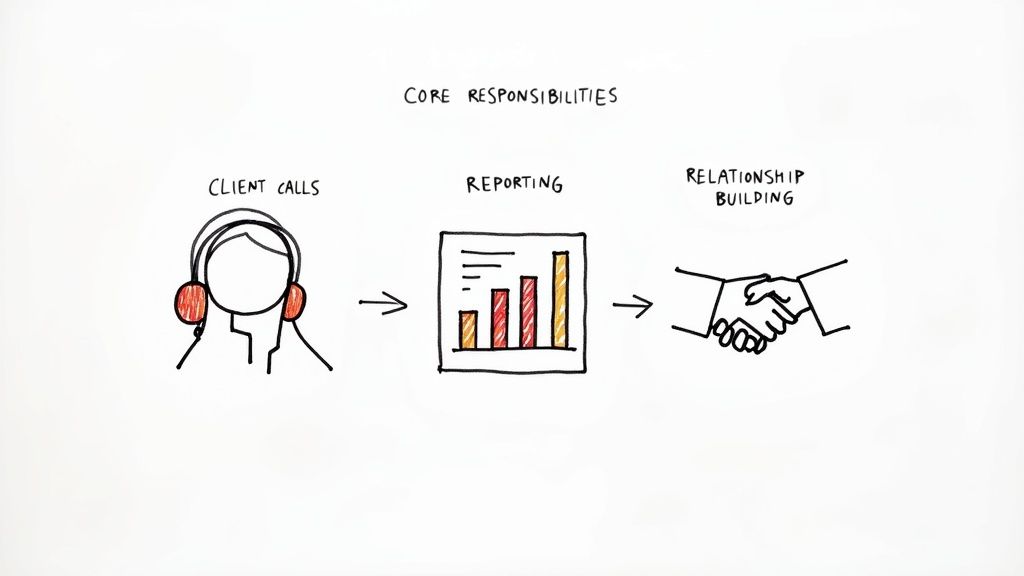
What does a typical day look like for a successful Account Manager? It's a dynamic mix of activities, all geared towards producing tangible results for clients. This isn't passive account maintenance; it's about actively nurturing thriving partnerships. It requires understanding how Account Managers handle numerous client portfolios while maintaining strong, individual relationships.
Mastering the Art of Client Communication
Much of an Account Manager's day revolves around communication. This encompasses everything from brief email check-ins to detailed meetings, both online and face-to-face. A typical morning might start with answering client questions, handling urgent needs, and working with internal teams to address any outstanding problems.
This groundwork allows for proactive client outreach later in the day. This might include discussing new opportunities or circling back on previous discussions.
Identifying and Pursuing Growth Opportunities
Effective Account Managers consistently seek out avenues for growth. This involves a thorough understanding of their clients' businesses, including their challenges and long-term objectives. They also need a strong grasp of their own company's products and services and how those offerings can address specific client needs.
This could involve analyzing client data, recognizing market trends, or partnering with clients to create tailored solutions. This proactive strategy positions Account Managers as valued advisors, not just service providers.
Navigating Complex Organizational Structures
Client organizations can be intricate, involving multiple stakeholders and decision-makers. Successfully maneuvering these structures is crucial for Account Managers. This means pinpointing key influencers, understanding their individual priorities, and adapting communication styles accordingly.
For instance, an Account Manager might create separate presentations for a technical team and a C-level executive. This ensures the information is pertinent and connects with each audience. Account Managers are essential for managing client relationships, ensuring customer satisfaction, and serving as liaisons between clients and companies. This role requires a deep understanding of the company's products or services and maintaining accurate customer records. Discover more insights about account manager job descriptions.
Managing Crisis and Maintaining Client Confidence
Even the best-laid plans encounter unexpected hurdles. How Account Managers handle these situations is a true test of their abilities and experience. This might involve addressing a product flaw, managing a service interruption, or resolving a miscommunication.
In every scenario, the focus is on preserving client trust, providing open communication, and collaborating towards a solution. Read also: How to master building a sales pipeline.
Prioritizing Competing Demands and Delivering Value
Account Managers often juggle competing requests from multiple clients. Skillfully prioritizing these demands while ensuring each client feels valued is a delicate balancing act. This requires strong organizational skills, efficient multitasking, and a clear understanding of each client's priorities.
This might involve strategically scheduling meetings, setting realistic deadlines, and proactively communicating about potential delays. The ultimate objective is to consistently deliver value beyond client expectations, fostering trust and cultivating long-term loyalty. This solidifies the Account Manager's position as a strategic partner dedicated to the client's success.
Salary Reality Check: What You Can Actually Earn
So, you're interested in a career in account management? You've researched the responsibilities and the necessary skills. Now, let's get to the part you've been waiting for: the salary. Forget generic averages; we're going to delve into the real-world factors that determine your earning potential.
Decoding the Salary Landscape for Account Managers
To truly understand account manager salaries, you need to look beyond the average figures. Several factors come into play, including your experience level, location, the industry you work in, and the size of the company. An entry-level Account Manager in a smaller city will likely earn less than a seasoned pro managing major accounts for a Fortune 500 company. This means your earning potential is heavily influenced by professional growth and smart career moves. While resources like Indeed report an average annual salary around $65,890, the actual range can vary significantly, from $14,000 to $176,000. The average base salary in the U.S. is approximately $67,426 per year.
Skills Proficiency and Your Paycheck
The infographic below illustrates the expected proficiency levels for key skills in account management.
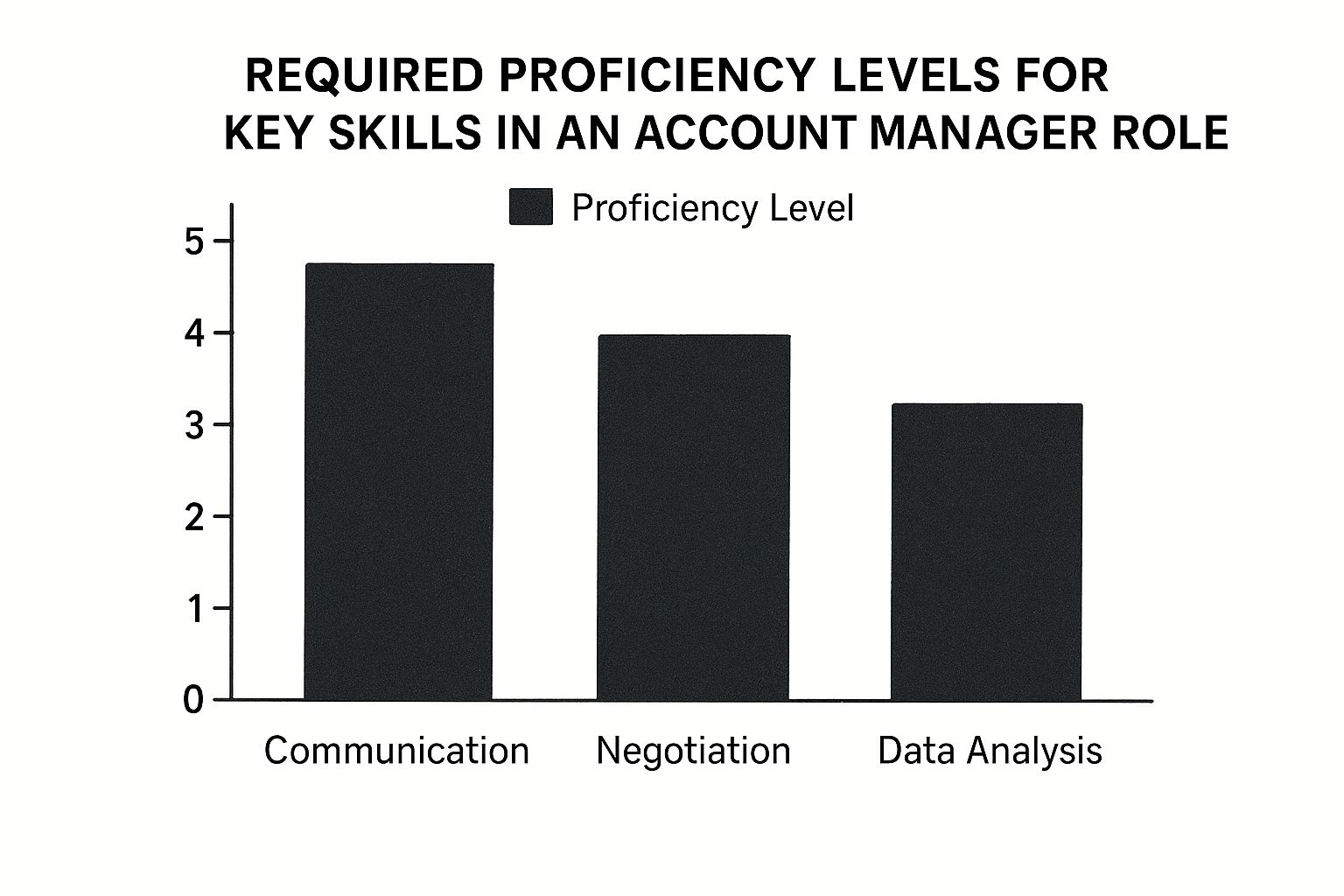
As you can see, communication is king, requiring the highest proficiency. Negotiation skills are also highly valued. While data analysis is important, the required proficiency level is often slightly lower. This highlights the need to develop strong interpersonal skills in addition to technical expertise to maximize your earnings. Mastering all three skill sets, however, can significantly increase your value and, consequently, your compensation.
Beyond the Base Salary: Bonuses and Commissions
Base salary is important, but the complete compensation package often includes bonuses and commissions. These performance-based incentives can substantially increase your overall earnings. Exceeding sales targets or renewing major client contracts often translates into significant bonus payouts. Some account management roles even offer commissions based on client growth or revenue generated. When evaluating a job description, understanding the bonus and commission structure is essential.
To help visualize how experience impacts salary, let's take a look at the table below:
Account Manager Salary by Experience Level
Comparison of salary ranges based on experience and performance levels
| Experience Level | Percentile | Salary Range | Key Responsibilities |
|---|---|---|---|
| Entry-Level (0-2 years) | 25th | $45,000 – $55,000 | Supporting senior account managers, managing smaller accounts, learning company systems and processes. |
| Mid-Level (3-5 years) | 50th | $60,000 – $75,000 | Independently managing a portfolio of clients, developing account strategies, identifying upsell and cross-sell opportunities. |
| Senior-Level (6+ years) | 75th | $80,000 – $100,000+ | Leading account teams, developing key client relationships, negotiating complex contracts, driving significant revenue growth. |
This table provides a general overview and actual salaries can vary. It's important to research specific roles and companies to get a more accurate picture of potential earnings.
The Impact of Performance on Earning Potential
One of the most attractive features of account management is the direct link between performance and earnings. Top performers often earn substantially more than their colleagues. Companies value and reward those who consistently deliver results, exceed expectations, and contribute to revenue growth. By focusing on skill development and achieving measurable results, you directly impact your earning potential. This performance-driven compensation model makes account management an appealing career path for driven professionals.
Skills That Actually Matter For Success

An account manager job description often includes a long list of skills. But which ones truly matter? What separates high-achieving account managers from the rest? The key is a combination of technical proficiency and strong interpersonal skills. Let's explore these essential capabilities and how they drive success.
The Foundation: Educational Background and Technical Skills
A strong foundation is essential for any aspiring account manager. Many employers prefer candidates with a bachelor's degree, often in business administration or marketing. Some companies even look for candidates with a master's degree or specialized certifications in client relations. This educational background provides account managers with fundamental business principles and marketing strategies. Indeed.com provides more detailed statistics.
However, education isn't everything. Technical skills, like proficiency in CRM software, data analysis tools, and presentation software are also essential. These tools allow account managers to manage client data, analyze performance, and deliver compelling presentations.
The Differentiator: Interpersonal Skills and Emotional Intelligence
While technical skills are necessary, interpersonal skills are often the true differentiator. These soft skills include communication, negotiation, problem-solving, and relationship building.
Effective communication ensures clear expectations and fosters strong client relationships. This involves active listening, empathy, and adapting communication styles. Strong negotiation skills are crucial for reaching agreements and resolving conflicts, finding solutions that benefit both the client and the company.
The Power of Emotional Intelligence
Emotional intelligence (EQ) is vital in account management. EQ involves understanding and managing your own emotions, as well as recognizing and responding to the emotions of others. This is key for building trust and rapport with clients. A high-EQ account manager can sense a client's frustration and respond with empathy, diffusing difficult situations and strengthening the relationship. This personal connection often outweighs technical expertise.
Communication Patterns That Build Trust
Successful account managers know that communication is about more than just words. They use specific communication patterns to build trust and rapport:
-
Active listening: Paying attention to both verbal and nonverbal cues from the client.
-
Clear and concise language: Avoiding jargon and using terminology the client understands.
-
Regular communication: Providing consistent updates and proactively addressing concerns.
-
Open and honest feedback: Giving and receiving constructive criticism to improve the relationship.
These communication strategies build trust and mutual respect, leading to long-term partnerships. By developing these skills, account managers become valuable assets to their companies and trusted partners to their clients. They contribute to revenue growth, client retention, and overall business success.
Career Paths That Lead Somewhere Great
So, you're thinking about a career as an Account Manager? You're drawn to working with clients, strategic thinking, and the potential for growth. But what are the real advancement opportunities, and how can you use your skills for long-term career success?
From Account Manager to Business Leader
An Account Manager role is more than just a job; it's a starting point. The skills you gain – building relationships, understanding client needs, and working within complex organizations – are valuable and easily transferable across many industries. This position can lead to numerous leadership roles. For instance, many Account Managers move into Senior Account Manager positions, managing larger client portfolios and mentoring junior team members.
The strategic thinking required in account management often prepares people for roles like Sales Manager, Marketing Manager, or even Director of Client Services. Working directly with clients gives you valuable insight into market trends and customer behavior, crucial for strong business strategies.
Specialization and Industry Expertise
Another option is to specialize within account management. Some Account Managers focus on enterprise accounts, working with large, complex organizations. This involves high-level strategic thinking and managing relationships with many stakeholders. Others specialize in a particular industry like technology, healthcare, or finance. This focused knowledge makes you a valuable asset in your chosen field.
The U.S. Bureau of Labor Statistics projects 8% growth in advertising, promotions, and marketing manager jobs between 2023 and 2033, about 31,000 new jobs. Account Managers can work in many sectors, including advertising, financial services, manufacturing, and technology. Find more detailed statistics here.
Emerging Trends and New Opportunities
Business is always changing, and that creates new chances for adaptable Account Managers. The growth of SaaS (Software as a Service) has increased the demand for Account Managers with technical skills. These individuals grasp the complexities of software implementation and can effectively support their clients.
The increasing focus on customer success has also elevated the Account Manager role. It's no longer just about sales; it's about ensuring clients get the results they want with the company's products or services. This has opened up new career paths like Customer Success Manager, where the emphasis is on long-term customer loyalty and maximizing the value of client relationships.
Transferable Skills for Career Advancement
As you advance in account management, some skills are especially valuable:
-
Communication: Clearly conveying information, actively listening to clients, and adapting your message to different audiences are vital for building strong relationships.
-
Negotiation: Mastering negotiation is key for closing deals, resolving conflicts, and creating win-win solutions.
-
Problem-solving: The ability to analyze problems, find root causes, and create effective solutions is crucial for client satisfaction and retention.
-
Relationship building: Developing strong, long-term client relationships is the core of account management and translates to any leadership role.
You might be interested in: How to master cost-effective recruitment strategies. These transferable skills, along with strategic thinking and industry knowledge, prepare Account Managers for many exciting career paths. By focusing on continuous learning and development, you can use your account management experience to reach your career goals.
Landing Your First Account Manager Role
Breaking into account management can feel challenging, especially without prior experience in the field. However, by focusing on your transferable skills and presenting them effectively, you can significantly improve your chances of landing your first account manager role. This involves showcasing your strengths in a way that resonates with potential employers.
Translating Your Skills Into Account Management Language
Even without the official title, many of your existing skills are directly applicable to account management. Consider your experience in customer service, sales, project management, or even areas like teaching. These roles often require building relationships, solving problems, and achieving goals – core components of successful account management.
For instance, if you have a background in customer service, highlight your ability to handle client inquiries, resolve issues efficiently, and build rapport. Previous project management experience demonstrates your organizational skills, ability to meet deadlines, and proficiency in coordinating with various stakeholders. The key is to frame your experience in a way that showcases your potential to excel in an account management position.
Crafting a Standout Resume and Cover Letter
Your resume and cover letter are your initial introduction to a potential employer. Tailor them to each specific job description, focusing on the skills and experiences most relevant to the requirements. Use action verbs to describe your accomplishments and quantify your results whenever possible. Instead of simply stating "Managed customer accounts," try something like "Increased client retention by 15% by implementing a proactive communication strategy."
Your cover letter provides a chance to demonstrate your understanding of the company and its clients. Research the company's industry and target market to show your initiative. Express genuine enthusiasm for building client relationships and contributing to their success. For more tips on the application process, resources like How to master the sales recruitment process can be helpful.
Targeting Companies With Strong Training Programs
Some companies offer robust training programs specifically designed for new Account Managers. These programs can equip you with the necessary knowledge and skills to succeed in the role. Targeting companies known for investing in employee development and mentorship demonstrates your commitment to professional growth and can make you a more desirable candidate.
Networking Your Way to Success
Account management is a relationship-focused field, making networking invaluable. Attend industry events, connect with professionals on LinkedIn, and leverage your existing network. These connections can offer valuable insights, potentially lead to unadvertised opportunities, and give you a distinct advantage.
Acing the Interview
Preparation is essential for a successful interview. Be ready to discuss your skills and experiences in detail, providing specific examples of how you've built relationships, resolved client issues, and achieved tangible results. Showcase your communication skills and emotional intelligence by actively listening, asking thoughtful questions, and expressing empathy.
Demonstrating your understanding of the account manager role by asking insightful questions about the company's client base, sales process, and performance expectations shows genuine interest. Focus on your potential to build strong client relationships and drive business growth – the hallmarks of a successful Account Manager.
Key Takeaways For Account Management Success
Your journey to becoming a successful Account Manager involves more than just ticking off daily tasks. It requires strategic thinking, strong interpersonal skills, and a commitment to constantly improving. This section provides a roadmap for not only meeting, but exceeding, performance expectations. It's about solidifying client relationships and positioning yourself for advancement within your role.
Building Strong Client Relationships
The heart of account management lies in fostering genuine, long-term client relationships. This goes beyond simply putting out fires. It requires a deep understanding of your clients’ businesses, anticipating their future challenges, and proactively offering solutions. These solutions should align with their long-term objectives. Become a trusted advisor, not just a vendor.
Consistent communication, active listening, and demonstrating genuine empathy build trust and rapport. These qualities contribute to increased client retention rates and create more opportunities for upselling and cross-selling.
Effective Communication Strategies
Account Managers often interact with diverse stakeholders within a client organization. Each stakeholder has different priorities and communication styles. Adapting your approach to suit these individual needs is critical. Tailoring your communication ensures that your message resonates effectively and strengthens your relationships with all key decision-makers.
Using clear, concise language and avoiding technical jargon helps clients understand the value you bring. Regularly checking in keeps them informed and reinforces your commitment to their success. This transparent and personalized approach builds credibility and strengthens client confidence.
Managing Multiple Accounts Efficiently
Handling numerous accounts simultaneously demands excellent organizational and time-management skills. Prioritization is essential. Focus on high-value accounts, while still ensuring that all clients receive appropriate attention. Tools like CRM software (Salesforce) can streamline tasks and provide a central hub for managing client interactions.
Effective prioritization and organization maximize your impact and ensure no client feels overlooked. This balance is crucial for sustained success in account management.
Measuring Your Impact: Key Metrics for Account Managers
Understanding which key performance indicators (KPIs) matter most allows you to track progress and demonstrate your value to the company. Focus on metrics like client retention rate, customer lifetime value, and revenue growth. Regularly reviewing these metrics helps identify strengths, pinpoint areas for improvement, and align your efforts with the company's overall business objectives. This data-driven approach strengthens your professional standing and justifies requests for additional resources or support.
The following table summarizes key metrics and their impact on career progression. It provides target ranges and explains why each metric is important for demonstrating effectiveness in account management.
Account Manager Success Metrics
| Metric Category | Key Indicators | Target Ranges | Impact on Career |
|---|---|---|---|
| Client Retention | Percentage of clients retained over a specific period | 90-95% or higher depending on industry | Demonstrates ability to build strong, lasting relationships |
| Client Satisfaction | Client feedback surveys, Net Promoter Score (NPS) | Consistently positive feedback, high NPS scores | Reflects quality of service and client rapport |
| Revenue Growth | Year-over-year revenue increase from existing clients | Consistent growth exceeding company targets | Highlights contribution to bottom-line profitability |
| Account Expansion | Upselling, cross-selling to existing clients | Increasing average revenue per client | Showcases ability to identify and capitalize on growth opportunities |
This table provides a framework for understanding how individual performance contributes to overall business success. By focusing on these key metrics, Account Managers can demonstrate their value and position themselves for advancement.
Continuous Learning and Development
The business world is constantly evolving. Staying ahead requires a commitment to continuous learning and professional development. Seek out opportunities to expand your industry knowledge, improve your technical skills, and refine your interpersonal abilities.
This could include attending industry conferences, participating in webinars, and pursuing relevant certifications. Continuous learning makes you a valuable asset to any organization and prepares you for future career growth.
Looking to build a high-performing remote sales team without overspending? AboutHire connects companies with top sales talent from Latin America and Europe, offering a cost-effective solution that delivers results. Learn more about how AboutHire can help you scale your sales efforts.