Building Your Sales Performance Evaluation Foundation
What separates truly successful sales organizations from the rest? It all comes down to their evaluation systems. Top-performing teams don't just track numbers; they use evaluations to predict and influence future success. This proactive approach transforms evaluations into a powerful tool for growth.
Why Most Evaluation Systems Fail
Many organizations stumble by focusing on vanity metrics. These numbers might look good on paper, but they don't necessarily translate to actual revenue growth. A large number of sales calls, for example, is meaningless if those calls aren't generating qualified leads. This misdirected focus leads to frustration and a lack of clear direction.
Infrequent evaluation is another common pitfall. Annual reviews simply aren't enough to provide the timely feedback needed for continuous improvement. It becomes difficult to identify and correct performance issues before they significantly impact revenue.
Balancing Art and Science
Effective sales performance evaluation blends data-driven insights with a deeper understanding of individual seller dynamics. Data is crucial, but it must be interpreted within the context of each sales representative's unique skills, challenges, and territory.
For example, a rep navigating a new market might initially have lower numbers. However, they might also demonstrate immense potential for future growth. Recognizing this nuance requires a balance of objective data and subjective assessment. This creates a culture of motivation and development.
Setting Benchmarks for Success
To truly motivate sales teams, you need realistic benchmarks that reflect both individual potential and overall business objectives. These benchmarks should be data-informed targets that challenge reps without being discouraging.
Regular feedback and coaching aligned with these benchmarks transforms evaluation. It's no longer a judgment process, but a collaborative effort toward improvement. This creates a positive feedback loop where evaluation directly drives performance.
Real-World Examples and Guidance
This approach to evaluating sales performance isn't just theory. Many organizations have used these principles to transform their sales outcomes. Learning from their successes offers a roadmap for building a more robust and effective system. Later sections will provide real-world templates and step-by-step guidance for putting these strategies into action. By understanding the fundamentals of successful sales performance evaluation, you can build a system that drives sustainable growth for your organization.
The Metrics That Actually Matter for Success
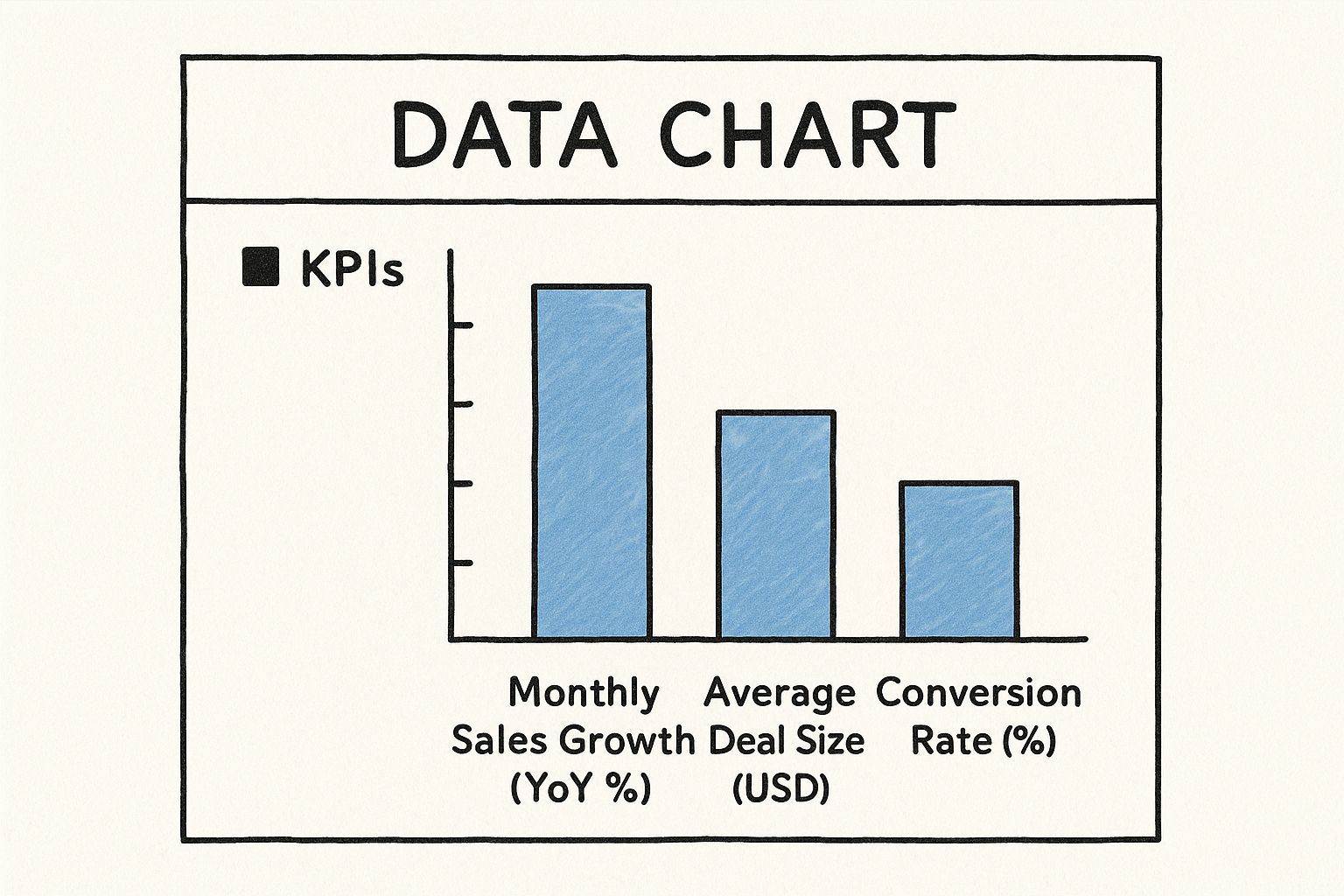
The infographic above illustrates three key performance indicators (KPIs): Monthly Sales Growth (YoY %), Average Deal Size (USD), and Conversion Rate (%). These metrics offer a quick look at sales growth and efficiency. Notice how focusing only on the positive trend of Monthly Sales Growth could cause you to miss potential improvements in Average Deal Size and Conversion Rate.
These other two KPIs provide valuable insights into areas ripe for improvement, such as pricing strategies and lead qualification processes. This highlights the importance of a balanced approach to performance measurement.
Beyond Activity: Focusing on Outcomes
This section explores which metrics truly predict sales success and drive effective evaluations. We'll examine the differences between activity metrics and outcome metrics, helping you choose the right indicators for your sales team. Interested in improving your sales team? Check out this resource: How to master the sales recruitment process.
Activity metrics, like the number of sales calls or emails, measure your team's actions. However, these metrics don't always reflect the effectiveness of those actions. You could be busy, but are you being productive?
Outcome metrics, on the other hand, focus on the results. Metrics like revenue generated or deals closed directly affect your bottom line. Prioritizing outcome metrics helps ensure your team's work translates into tangible results. This fosters a results-oriented culture, avoiding the trap of rewarding mere busyness.
Finding the Right Balance: Combining Metrics for a Clearer Picture
Relying only on outcome metrics can make it tough to pinpoint specific areas for improvement in the sales process. The best strategy combines both activity and outcome metrics.
For example, tracking both sales calls (activity) and the conversion rate of those calls (outcome) paints a more complete picture. This approach provides actionable insights into lead qualification, pricing, and overall sales process effectiveness.
Building Effective Dashboards: Highlighting Opportunities
Effective dashboards don't just show problems; they reveal opportunities. Visualizing key metrics together unlocks a deeper understanding of potential future performance.
Imagine a dashboard revealing high sales call volume but a low conversion rate. This immediately suggests a potential problem with lead qualification or sales pitch effectiveness. Addressing this issue could dramatically improve overall sales.
This proactive approach transforms dashboards from reporting tools into strategic assets. It empowers sales leaders to pinpoint areas for improvement and optimize strategies for maximum impact.
To further illustrate this point, let's examine a comparison of core sales performance metrics:
To help illustrate the differences between leading and lagging indicators, and how they can be used together, here's a helpful table:
Core Sales Performance Metrics Comparison
A comprehensive comparison of leading vs lagging indicators, their measurement frequency, and impact on performance evaluation
| Metric Type | Measurement Frequency | Predictive Value | Implementation Difficulty |
|---|---|---|---|
| Leading Indicators (Activity-based): | |||
| Number of Sales Calls | Daily/Weekly | Low (measures effort, not results) | Easy |
| Number of Qualified Leads | Weekly/Monthly | Medium (indicates potential future sales) | Moderate |
| Lagging Indicators (Outcome-based): | |||
| Revenue Generated | Monthly/Quarterly | High (reflects actual sales performance) | Moderate |
| Average Deal Size | Monthly/Quarterly | High (indicates deal quality and pricing effectiveness) | Moderate |
| Conversion Rate | Weekly/Monthly | High (shows effectiveness of sales process) | Moderate |
Key takeaway: While lagging indicators reflect past performance, leading indicators offer insights into future potential. Combining both types provides a holistic view and enables proactive course correction. By analyzing these metrics together, sales teams can make more informed decisions and optimize their strategies for sustainable growth.
Technology's Game-Changing Role in Performance Tracking
Top sales teams are increasingly using technology to boost their performance. This reflects the growing need for data-driven insights when evaluating how well a sales team is doing. This section explores how tools like Customer Relationship Management (CRM) systems and analytics platforms are changing this process.
CRM: The Central Hub for Performance Data
CRM systems are like a central library for all sales information. They're crucial for evaluating sales performance. CRMs provide a complete overview of every sales representative's actions, client interactions, and the progress of each deal. This lets sales managers monitor important metrics, track progress towards goals, and pinpoint areas for improvement. A properly implemented CRM system is the base for data-driven sales evaluations.
For example, CRM data can reveal important details about sales cycles and how often deals close successfully. This helps sales managers find any roadblocks and improve sales processes for better results. This transparent data creates a sales culture focused on accountability and high performance.
Analytics Platforms: Unlocking Deeper Insights
CRMs provide the raw data, but analytics platforms turn that data into useful insights. These platforms often connect with CRMs for a broader view of sales performance. They can uncover trends, spot patterns, and even predict future outcomes. This in-depth analysis helps make better strategic decisions and offer more focused coaching.
Think of an analytics platform as a high-powered lens, revealing the fine details of your sales process. It lets you zoom in on specific areas and accurately pinpoint issues. This leads to more effective solutions and better sales performance overall.
Integrating Data Sources: Creating a Cohesive Picture
Modern sales teams use many different technologies besides CRM and analytics platforms. Connecting these separate data sources into a single performance dashboard is key. This combined view gives a complete understanding of sales performance across various channels and activities. It's like having a panoramic view of the entire sales environment.
This smooth integration not only improves efficiency but also encourages better teamwork between departments. For example, marketing and sales teams can work together more effectively based on shared performance data. Plus, connecting these data sources can really improve sales productivity. Setting up a CRM can be a game-changer: 94% of businesses report higher sales productivity after adopting one. In fact, businesses using CRM applications can see sales increase by up to 29%, sales productivity rise by 34%, and sales forecast accuracy improve by 42%. Find more detailed statistics here. This really highlights how technology can lead to real sales improvements.
Avoiding Technology Pitfalls: Choosing the Right Tools
While technology offers many advantages, it's crucial to choose and use these tools wisely. Systems that are too complicated can be overwhelming for teams and can actually hinder performance evaluations. The goal is to choose technology that simplifies the evaluation process, not makes it more complex. This usually involves carefully studying your team’s particular needs and how they work. This ensures the technology helps the team, rather than creating extra work.
Implementing Real-Time Tracking and Automated Reporting
Real-time tracking gives instant feedback on sales activities, allowing for quick changes and course correction. Automated reports further boost efficiency by getting rid of manual data entry and freeing up time for more strategic work. This mix of real-time tracking and automated reports creates a more dynamic and adaptable sales environment. It allows sales leaders to make quicker, data-backed decisions. By using the power of technology, companies can shift sales performance evaluation from looking back to looking ahead strategically. This sets up sales teams for greater success.
Advanced Analytics That Drive Strategic Decisions
Beyond basic sales reports lies a wealth of data insights that can significantly improve your sales strategy. This section explores how businesses use predictive analytics, Artificial Intelligence (AI), and Machine Learning (ML) to find performance patterns, leading to more effective coaching and better processes.
Uncovering Hidden Patterns: Predictive Analytics
Predictive analytics leverages historical data to project future sales trends. This allows businesses to anticipate market fluctuations, optimize how they allocate resources, and proactively address potential problems. For example, if the data shows a seasonal dip in sales for a specific product, the business can plan a targeted marketing campaign or adjust inventory levels. This proactive approach helps minimize risk and capitalize on opportunities.
AI and ML: Automating Insights and Personalizing Coaching
AI and ML enhance predictive analytics by automating data analysis and revealing intricate relationships within the sales process. Imagine AI identifying specific sales techniques that are particularly effective with certain customer demographics. This allows sales managers to personalize coaching based on individual reps' strengths and weaknesses. This focused approach boosts coaching effectiveness and elevates overall team performance. You might be interested in: How to master sales skills assessments.
Correlation vs. Causation: Avoiding Misinterpretations
While data analysis provides invaluable information, it's crucial to distinguish between correlation and causation. Just because two factors seem related doesn't mean one directly causes the other. For instance, a rise in sales might correlate with increased marketing spending, but other factors, such as improved product features or seasonal demand, might also play a role. Thorough analysis is essential to determine the actual drivers of sales performance and avoid misinterpreting data trends.
Visualization: Making Data Accessible and Actionable
Complex data becomes much more user-friendly through effective visualizations. Tools like dashboards and charts convert raw numbers into easy-to-understand insights. This makes it easier for everyone on the team to grasp performance trends and contribute to strategic decisions. This shared understanding promotes collaboration and aligns the sales team around common objectives.
Building Analytics Capabilities: Practical Approaches
Implementing advanced analytics doesn't necessitate a complete operational overhaul. Many businesses begin by pinpointing Key Performance Indicators (KPIs) most relevant to their business model. They then progressively incorporate data analysis tools and techniques into their existing workflow. This gradual approach minimizes disruption and allows organizations to develop their analytical capabilities over time.
Identifying Performance Trends: Focusing on What Matters
The sheer amount of available data can be daunting. Focusing on performance trends crucial to your business is paramount. This means aligning analytics with overarching business goals. For example, if customer retention is a priority, analyzing churn rates and identifying factors that influence customer loyalty become key metrics. This focused approach ensures data analysis contributes directly to strategic goals. By meticulously selecting and analyzing the right data, businesses can unlock valuable insights that propel continuous improvement and achieve sustainable sales growth.
The Expanding Sales Performance Management Landscape
The business world is in constant motion, and how we measure sales performance is no exception. Companies are realizing that evaluating sales performance is key to overall success. This exploration dives into the significant growth of Sales Performance Management (SPM) solutions and how they can transform your evaluation strategies.
The Growth of Specialized SPM Solutions
Investing in robust performance management systems isn't just a passing fad; it's a strategic imperative in today's competitive business environment. Companies understand that better evaluation leads to better results. This realization fuels the demand for dedicated SPM solutions.
These systems go beyond simple tracking. They provide deep analysis, predictive capabilities, and actionable advice. This empowers businesses to not only measure performance, but actively manage and improve it.
The SPM market's growth speaks volumes. From $7.11 billion in 2024, it's projected to reach $8.07 billion in 2025, a 13.5% increase. Further projections estimate a staggering $16.35 billion by 2029 at a 19.3% CAGR. Learn more about this growing market. This rapid expansion highlights the increasing importance businesses place on effective sales performance management.
Driving Forces Behind SPM Investment
Why are successful organizations pouring resources into these systems? The answer lies in the pursuit of measurable business outcomes. Sophisticated SPM solutions offer the insights needed to optimize sales processes, boost individual rep performance, and ultimately, drive revenue growth. The return on investment is clear.
These systems can uncover hidden patterns and trends that traditional methods often miss. This allows sales leaders to proactively address potential problems, refine sales strategies, and allocate resources more effectively, creating a more efficient and productive sales team.
Emerging Trends and Competitive Advantages
The expanding SPM landscape reveals key emerging trends. The use of AI and machine learning for sales data analysis is on the rise. These technologies offer predictive insights and highlight improvement opportunities that were previously difficult to identify.
Real-time performance tracking is another significant development. This allows for immediate feedback and faster adjustments to sales strategies. Companies that embrace these trends gain a distinct competitive edge. They're better prepared for market shifts, sales process optimization, and adapting to changing customer needs.
Preparing for the Future of Sales Performance Evaluation
Understanding these trends allows for informed decisions regarding your own evaluation tools and strategies. This foresight helps you prepare for evolving best practices and discover new ways to improve your measurement approaches. By being proactive, your sales performance evaluation can become a lasting source of competitive advantage.
Implementing Evaluation Practices That Actually Work
Evaluating sales performance isn't just about tracking numbers; it’s about cultivating a culture of continuous improvement. This section offers practical frameworks for implementing evaluation systems that genuinely drive positive change across your organization. We'll explore how to train managers to conduct motivating evaluations and establish feedback loops that transform evaluation into a competitive edge.
Training Managers: The Human Element of Evaluation
Effective evaluations start with well-trained managers. Managers need to understand that evaluations aren't about criticism, but about development. They should be equipped to deliver feedback constructively, highlighting both strengths and areas for growth. This positive approach cultivates a growth mindset within the sales team.
For example, rather than simply pointing out a missed quota, a manager could discuss the underlying reasons and collaborate with the rep to create a plan for improvement. This collaborative approach transforms evaluations into a shared journey toward success.
Feedback Loops: Turning Evaluation Into a Competitive Advantage
Traditional annual reviews are often too late to effectively address performance issues. Regular feedback loops, whether weekly, monthly, or quarterly, provide timely insights that enable faster course correction. These consistent check-ins transform evaluation from a dreaded event into a valuable tool for ongoing development.
Frequent feedback also helps managers to identify and address any roadblocks reps might face, like difficulties with a new product launch or shifts in the competitive market. Addressing these challenges promptly prevents them from becoming larger performance issues.
To understand how to build a strong sales team, check out our article about how to hire a remote sales team.
Establishing Fair Performance Standards: Balancing Roles and Territories
Creating a sense of fairness is essential for motivating sales teams. Performance standards should take into account the unique challenges and opportunities associated with different roles and territories. A rep in a new territory, for instance, might have different targets than a rep in a mature market.
Different sales roles also have distinct responsibilities and corresponding metrics. An account manager focused on client retention will have different KPIs than a sales development representative focused on lead generation. Acknowledging these differences ensures fair and effective evaluations.
Regular Performance Reviews: Focusing on Improvement, Not Judgment
Performance reviews should be structured conversations focused on growth. They provide an opportunity to celebrate accomplishments, identify areas for development, and create a shared vision for future success. This positive approach helps reps view evaluations as opportunities for improvement, not as sources of anxiety.
These discussions should also involve goal setting and development planning that promotes lasting behavioral change. By connecting performance reviews to tangible action steps, reps can turn feedback into better results. This empowers them to take charge of their development and strive for continuous improvement.
Let’s look at a potential timeline for implementation:
To help visualize the implementation process, we've put together a helpful table outlining the key phases and activities.
Performance Evaluation Implementation Timeline: This table outlines the step-by-step implementation schedule for establishing comprehensive sales performance evaluation processes.
| Phase | Timeline | Key Activities | Success Metrics |
|---|---|---|---|
| Manager Training | 1-2 Months | Workshops on constructive feedback, role-playing exercises, development planning training | Improved manager feedback quality (based on rep surveys), Increased manager confidence in conducting evaluations |
| Feedback Loop Implementation | 1 Month | Establish regular check-in meetings (weekly/monthly/quarterly), Develop feedback templates, Implement feedback tracking system | Increased frequency of feedback, Improved rep responsiveness to feedback |
| Performance Standard Definition | 2-3 Months | Analyze roles and territories, Define KPIs for each role, Establish clear performance targets, Communicate standards to the sales team | Clearly defined performance standards for each role, Increased transparency and understanding of expectations among reps |
| Performance Review Process Rollout | Ongoing | Schedule regular performance reviews, Implement a structured review process, Train managers on conducting effective reviews | Increased rep engagement in performance reviews, Measurable improvement in rep performance based on agreed-upon goals |
This timeline provides a structured approach to implementing a robust performance evaluation system. By following these phases, organizations can ensure a smooth transition and maximize the positive impact on sales team performance.
Actionable Guidance: Goal Setting and Development Planning
Effective evaluations result in concrete action plans. These plans should outline specific goals, clear steps for improvement, and a timeline for achieving those goals. This provides reps with a roadmap for success and empowers them to take ownership of their development.
For example, a rep struggling to close deals might create a plan that includes attending a negotiation skills workshop and shadowing a high-performing colleague. This focused approach ensures that feedback translates into tangible improvement. By employing these practical strategies, sales leaders can create evaluation systems that motivate, develop, and ultimately boost performance across the entire sales organization.
Key Takeaways
Evaluating sales performance effectively is the foundation of a successful sales organization. This section offers a practical guide to enhancing your evaluation methods, complete with actionable checklists, key priorities, and indicators of success. Each takeaway provides clear steps for immediate implementation, alongside realistic benchmarks to track progress and pinpoint areas for improvement.
Focus on the Right Metrics
Don't get sidetracked by superficial metrics. Instead, concentrate on the metrics that genuinely reflect sales success. Outcome metrics, like revenue generated and deals closed, directly impact your bottom line. Combine these with activity metrics, such as the number of qualified leads, to get a complete picture of performance.
- Prioritize outcome metrics: Concentrate on results directly contributing to revenue growth.
- Incorporate activity metrics: Gain valuable insights into the actions that drive those results.
- Use dashboards effectively: Visualize key metrics to easily identify opportunities for improvement.
Leverage Technology Wisely
Technology is essential in modern sales performance evaluation. CRM systems like Salesforce and analytics platforms like Google Analytics provide powerful tools for tracking, analyzing, and interpreting sales data. However, choosing technology that simplifies, not complicates, your processes is crucial.
- Select the right tools: Choose technology that aligns with your team's specific needs and existing workflows.
- Integrate data sources: Connect various platforms for a unified view of overall performance.
- Automate reporting: Free up valuable time for strategic analysis and coaching activities.
Implement Effective Evaluation Practices
Even the most advanced technology is ineffective without the right processes. Train managers to conduct evaluations that motivate and develop, not discourage, their team members. Establish regular feedback cycles to facilitate ongoing improvement and growth.
- Train managers effectively: Equip your managers with the skills to provide constructive feedback and mentorship.
- Establish regular feedback loops: Encourage continuous improvement through frequent check-ins and open communication.
- Create fair performance standards: Consider the individual challenges and opportunities presented by different roles and territories.
Embrace Advanced Analytics
Beyond standard reporting, advanced analytics offers deeper insights into sales performance. Predictive analytics, AI, and ML can uncover hidden patterns and trends. However, it's important to differentiate between correlation and causation.
- Use predictive analytics: Anticipate future performance and address potential challenges proactively.
- Apply AI and ML cautiously: Interpret insights carefully, avoiding potential misinterpretations of the data.
- Visualize data effectively: Make complex information easily accessible and actionable for your team.
Stay Ahead of the Curve
The sales performance management landscape is constantly changing. Staying informed about emerging trends will ensure your evaluation practices remain effective and competitive.
- Monitor industry trends: Stay up-to-date on the latest developments in sales performance management.
- Adapt your strategies: Refine your approach to incorporate evolving best practices and maintain a competitive edge.
- Seek continuous improvement: Treat evaluation as an ongoing process of learning, growth, and adaptation.
Ready to build a top-performing sales team that consistently surpasses expectations? AboutHire connects you with the top 0.5% of remote sales talent from Latin America and Europe. Our rigorous vetting process and customized training ensure you find the ideal candidate for your team. Learn more about how AboutHire can transform your sales organization.