Unlocking Sales Success: The Right Questions to Ask
Hiring exceptional sales representatives is paramount to revenue growth. This curated list of sales rep interview questions offers a direct path to identifying top talent. These questions go beyond the superficial, providing actionable insights into a candidate's true potential. We'll explore eight key questions, each designed to uncover crucial skills and attributes. You'll learn what to listen for in candidate responses, effective follow-up probes to gain deeper understanding, and potential red flags that signal a mismatch.
This guide equips you to evaluate candidates effectively, whether you're hiring SDRs, BDRs, account managers, or sales leaders. We'll delve into critical areas such as:
- Sales Experience and Track Record: Understanding past performance and key accomplishments.
- Resilience and Motivation: How candidates handle rejection and maintain drive.
- Sales Process Mastery: Evaluating their approach from lead generation to closing deals.
- Prospecting and Qualification: Uncovering their ability to identify and target ideal customers.
- Learning from Failure: How they analyze setbacks and apply lessons learned.
- Handling Objections: Assessing their ability to address customer concerns and resistance.
- Needs Discovery: Exploring their questioning techniques to uncover customer pain points.
- Pipeline Management: Understanding their approach to forecasting and sales management.
Mastering these sales rep interview questions will dramatically improve your hiring decisions. You'll minimize costly hiring mistakes and build a high-performing sales team capable of driving significant revenue growth. This comprehensive guide helps you identify candidates who possess not only the necessary skills and experience, but also the right mindset to thrive in your organization. Let's dive in.
1. Tell me about your sales experience and track record
This foundational sales rep interview question unveils a candidate's background, achievements, and ability to quantify their sales performance. It's a crucial starting point, allowing you to gauge their career progression, consistency in meeting targets, and understanding of core sales principles. Don't just listen to their narrative; actively assess how they frame their experiences. Are they focused on activities, or do they emphasize results and quantifiable achievements? This question helps separate those who simply do sales from those who excel at it.

What to Look For in a Response
A strong answer goes beyond a simple job title and company list. Top candidates will quantify their contributions, highlighting key metrics that demonstrate their impact. Here's what to listen for:
- Specific Numbers and Timeframes: Instead of vague statements like "I consistently exceeded quota," look for specifics like "I exceeded quota by 15% in Q1 and 20% in Q2 of 2023." This demonstrates an understanding of performance measurement.
- Progression and Growth: A clear career trajectory, even within the same company, showcases ambition and a willingness to take on new challenges. Moving from a Business Development Representative (BDR) to an Account Executive, coupled with revenue growth, is a strong indicator of potential.
- Quantifiable Achievements: Numbers speak volumes. Look for candidates who can readily quantify deals closed, pipeline generated, and client retention rates. These metrics provide concrete evidence of their sales success.
- Learning from Setbacks: Not every sales experience is a win. How a candidate discusses challenges and setbacks reveals their resilience and ability to learn from mistakes. Listen for instances where they've adapted their approach and achieved better outcomes.
Probing Deeper with Follow-Up Questions
This initial question is just a springboard. Follow-up probes are essential to uncovering the depth of a candidate's experience and understanding of the sales process.
- "Can you elaborate on a specific deal where you exceeded expectations? What strategies contributed to your success?"
- "Describe a time you faced a challenging sales objection. How did you overcome it?"
- "How do you track your sales performance and identify areas for improvement?"
- "What's your approach to building and nurturing long-term client relationships?"
Why This Question Matters
Including "Tell me about your sales experience and track record" in your sales rep interview questions is non-negotiable. It’s fundamental for several reasons:
- Assessing Core Competencies: It quickly identifies candidates who possess the fundamental sales skills needed to succeed in your organization.
- Filtering Out Underperformers: Vague answers or an inability to quantify achievements can be red flags, helping you filter out less qualified candidates early in the process.
- Predicting Future Performance: Past performance is often a good predictor of future success. By analyzing a candidate's track record, you can gain insights into their potential to contribute to your team's goals.
- Evaluating Cultural Fit: How a candidate describes their experiences can reveal insights into their work ethic, communication style, and overall fit within your company culture.
Learn more about… effective strategies for assessing sales skills during the interview process. By focusing on quantifiable achievements and probing deeper with targeted follow-up questions, you can identify top-performing sales reps who can drive revenue growth for your business.
2. How do you handle rejection and maintain motivation?
This psychological resilience question evaluates a candidate's mental toughness, emotional intelligence, and coping mechanisms for dealing with the inherent rejection in sales roles. It assesses their ability to bounce back from setbacks and maintain consistent performance in the face of "no." Understanding how a potential sales rep handles rejection is crucial for predicting their long-term success and resilience within your team. This question helps identify candidates who possess the psychological fortitude to thrive in a sales environment.
The infographic illustrates the process a resilient sales rep follows after facing rejection. It highlights the importance of having a coping strategy and, crucially, the ability to transform setbacks into learning opportunities that fuel future motivation. Resilience isn't about avoiding rejection; it's about how effectively one recovers and learns from it.
What to Look For in a Response
A strong answer demonstrates self-awareness and proactive strategies for managing rejection. Look for the following:
- Specific Coping Mechanisms: Candidates should articulate clear strategies for managing rejection, such as exercise, meditation, mindfulness, or positive self-talk. Vague responses like "I just shake it off" lack depth and demonstrate a lack of preparedness for the inevitable challenges of sales.
- Real-Life Examples: Ask for specific examples of how they've overcome major setbacks. How did they regain motivation after losing a significant deal? Their response will offer valuable insights into their resilience and problem-solving abilities.
- Learning from Rejection: Top candidates view rejection not as a failure but as a learning opportunity. They analyze what went wrong, adjust their approach, and apply those lessons to future interactions. This demonstrates a growth mindset and a commitment to continuous improvement.
- Sustainable Strategies: Ensure the coping mechanisms they describe are healthy and sustainable in the long run. Unhealthy coping strategies could signal potential issues down the line.
Probing Deeper with Follow-Up Questions
Follow-up questions help you gauge the depth of a candidate's resilience:
- "Describe a time you faced significant rejection. How did you handle it, and what did you learn from the experience?"
- "What strategies do you use to stay motivated when facing a string of rejections?"
- "How do you separate personal feelings from professional setbacks in sales?"
- "Can you share an example of how you turned a rejection into a future success?"
Why This Question Matters
Including "How do you handle rejection and maintain motivation?" in your sales rep interview questions is vital for:
- Predicting Resilience: This question provides insights into a candidate's ability to withstand the pressures of sales and consistently perform even when facing adversity.
- Assessing Emotional Intelligence: Understanding how candidates manage their emotions in challenging situations offers valuable insights into their overall emotional intelligence and self-awareness.
- Identifying Growth Potential: Candidates who view rejection as a learning opportunity demonstrate a growth mindset, a key trait for continuous improvement and long-term success in sales.
- Reducing Turnover: By hiring resilient sales reps, you can reduce the likelihood of turnover due to discouragement or burnout, saving your company time and resources.
Learn more about… effective strategies for assessing sales psychology during the interview process. By understanding a candidate's coping mechanisms and ability to learn from rejection, you can identify resilient sales reps equipped to thrive in the face of challenges.
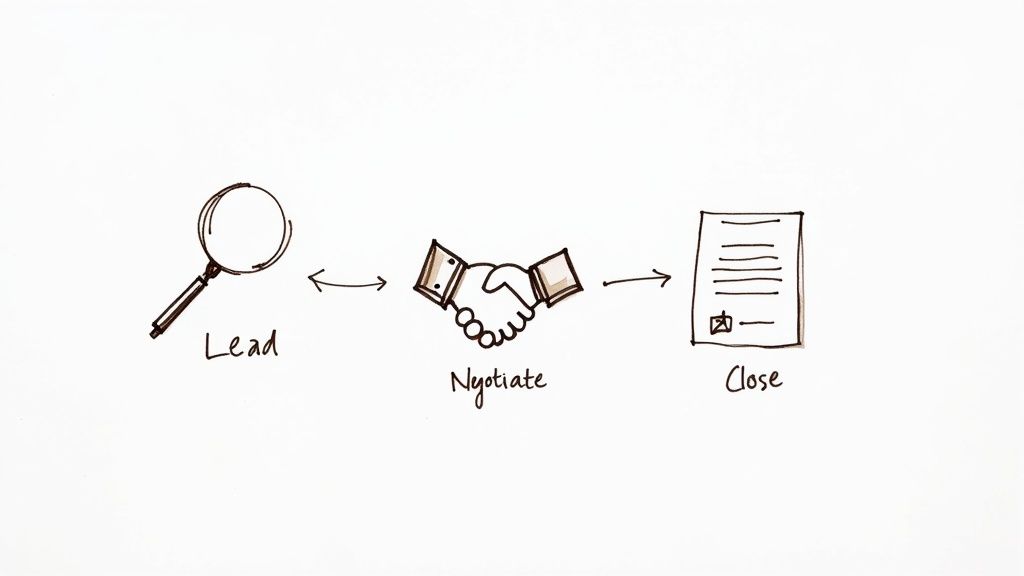
3. Walk me through your sales process from lead to close
This process-oriented sales rep interview question evaluates a candidate's systematic approach to sales. It unveils their understanding of sales methodology and their ability to structure and manage sales cycles effectively. This question reveals their strategic thinking and organizational skills, highlighting how they move prospects through the sales funnel. It helps determine if their approach aligns with your company's sales philosophy and whether they possess the discipline to follow a defined process.
What to Look For in a Response
A strong response demonstrates a clear understanding of the sales process stages, from initial contact to closing the deal. Top candidates will articulate a structured approach, demonstrating adaptability and a customer-centric mindset. Listen for these key elements:
- Defined Stages: The candidate should clearly outline the steps in their sales process, such as prospecting, qualification, needs analysis, presentation, handling objections, and closing.
- Customer Focus: Their process should emphasize understanding customer needs and providing solutions, not just pushing products. Look for evidence of active listening and tailoring their approach to individual clients.
- Flexibility: While a structured process is important, the best reps know when to adapt. Listen for instances where they've adjusted their strategy based on specific customer situations or market dynamics.
- Metrics and Measurement: Strong candidates track their progress throughout the sales cycle. They use metrics like conversion rates and deal velocity to identify areas for improvement and optimize their approach.
Probing Deeper with Follow-Up Questions
Follow-up questions are crucial to gaining a deeper understanding of the candidate's sales process and how they apply it in practice.
- "Can you describe a specific situation where you had to adapt your sales process to meet a client's unique needs?"
- "How do you use data and metrics to track your sales performance and identify areas for improvement within your process?"
- "Walk me through a recent deal, highlighting how you navigated each stage of your sales process."
- "How do you balance following a structured sales process with being responsive to individual customer needs?"
Why This Question Matters
Including "Walk me through your sales process from lead to close" among your sales rep interview questions is vital for assessing a candidate's strategic approach to selling.
- Evaluating Sales Methodology: It helps you understand if their sales methodology aligns with your company's approach and whether they can effectively apply it.
- Assessing Organizational Skills: A well-defined sales process demonstrates organizational skills and the ability to manage multiple deals simultaneously.
- Predicting Sales Success: Candidates with a structured and customer-centric sales process are more likely to consistently close deals and achieve their targets.
- Identifying Adaptability: Understanding how they adjust their process to different situations reveals their adaptability and problem-solving skills, essential for navigating complex sales cycles.
This question helps you identify sales reps who possess the strategic thinking, organizational skills, and customer focus needed to drive revenue growth for your business. Understanding a candidate's sales process is a strong indicator of their potential to succeed within your organization.
4. How do you research and qualify prospects?
This targeting and preparation question assesses a candidate's ability to identify ideal customers, conduct thorough research, and qualify opportunities effectively. It evaluates their efficiency in focusing efforts on high-probability prospects and avoiding wasted time on leads unlikely to convert. Understanding a sales rep's research and qualification process is crucial for predicting their potential to contribute to your sales pipeline.
What to Look For in a Response
A strong response demonstrates a structured approach to prospecting, combining data-driven research with strategic qualification. Listen for these key elements:
- Multi-Source Research: Top performers don't rely on a single source. They leverage tools like LinkedIn Sales Navigator, company websites, industry reports, and CRM data to build a comprehensive picture of each prospect.
- Balance Between Research and Action: While thorough research is crucial, it shouldn't paralyze a rep. Look for a balance between gathering information and taking action to engage prospects.
- Clear Qualification Criteria: Effective qualification involves using frameworks like BANT (Budget, Authority, Need, Timeline) or MEDDIC (Metrics, Economic buyer, Decision criteria, Decision process, Identify pain, Champion) to determine prospect suitability.
- Personalized Outreach: Generic outreach falls flat. The best reps personalize their approach based on their research, demonstrating a genuine understanding of the prospect's needs and challenges.
Probing Deeper with Follow-Up Questions
Dig deeper into the candidate's process with targeted follow-up questions like:
- "Walk me through your typical process for researching a new prospect. What resources do you use?"
- "Describe a time your research uncovered a critical piece of information that helped you close a deal."
- "How do you prioritize prospects when you have a limited amount of time?"
- "How do you tailor your outreach based on your research findings?"
Why This Question Matters
Including "How do you research and qualify prospects?" in your sales rep interview questions is essential for several reasons:
- Identifying Efficient Prospectors: It reveals how candidates identify and prioritize high-potential prospects, maximizing their time and effort.
- Assessing Research Skills: It gauges their ability to gather and analyze information from diverse sources, a crucial skill in today's data-driven sales environment.
- Evaluating Qualification Methodology: It helps you understand their approach to qualifying leads, ensuring alignment with your company's sales process.
- Predicting Pipeline Quality: A strong research and qualification process leads to a healthier pipeline filled with qualified opportunities, ultimately impacting revenue generation.
Learn more about… How do you research and qualify prospects? and other crucial aspects of the sales recruitment process. By assessing a candidate's research and qualification methodology, you can identify sales reps who are equipped to effectively target and engage high-potential prospects, driving sustainable revenue growth for your business.
5. Describe a time when you lost a major deal and what you learned
This failure analysis question, "Describe a time when you lost a major deal and what you learned," is crucial for evaluating a candidate's self-awareness, resilience, and growth mindset. It delves into their ability to learn from setbacks, take accountability, and adapt their approach for future success. Losing a deal is inevitable in sales; how a candidate reflects on those losses reveals valuable insights into their character and potential. This question helps separate those who dwell on failure from those who use it as a stepping stone to improvement.
What to Look For in a Response
A strong answer will go beyond simply recounting the loss. Top candidates will analyze the situation, identify specific contributing factors, and articulate the lessons learned. Listen for:
- Specific Reasons for the Loss: Avoid candidates who place blame solely on external factors. Look for those who critically examine their own role in the lost deal, acknowledging areas where they could have improved.
- Actionable Lessons Learned: The key isn't just identifying what went wrong, but demonstrating an understanding of how to prevent similar situations in the future. Look for specific, actionable steps the candidate has taken to improve their sales process.
- Implementation of Improvements: A genuine learning experience translates into changed behavior. Top candidates will provide examples of how they've implemented these lessons in subsequent deals, demonstrating a commitment to continuous improvement.
- Taking Ownership: While external factors can certainly contribute to a lost deal, strong candidates will take ownership of their role in the outcome, demonstrating accountability and a willingness to learn from mistakes.
Probing Deeper with Follow-Up Questions
Follow-up questions can help you gain a more nuanced understanding of the candidate's learning process and their ability to adapt.
- "How did you identify the root cause of the lost deal?"
- "What specific steps have you taken to implement the lessons learned?"
- "Can you share an example of a subsequent deal where you successfully applied these changes?"
- "How has this experience shaped your overall approach to sales?"
Why This Question Matters
Including this question in your sales rep interview questions is essential for several reasons:
- Assessing Resilience: Sales involves facing rejection. This question helps gauge a candidate's ability to bounce back from setbacks and maintain a positive outlook.
- Evaluating Self-Awareness: Honest self-reflection is crucial for growth. This question reveals a candidate's level of self-awareness and their willingness to acknowledge areas for improvement.
- Predicting Future Performance: A candidate's ability to learn from past mistakes is a strong indicator of their potential for future success. It demonstrates adaptability and a commitment to continuous learning.
- Identifying Coachable Candidates: Candidates who are open to feedback and actively seek self-improvement are more likely to be successful in a coaching environment.
This question provides valuable insights into a candidate's character and potential for growth, helping you identify sales reps who can learn from setbacks and contribute to your team's long-term success. It allows you to discern those who view failure as a learning opportunity, ultimately making them stronger and more effective salespeople.
6. How do you handle price objections?
This critical sales rep interview question delves into a candidate's ability to navigate one of the most prevalent sales hurdles: price objections. It assesses their grasp of your value proposition, negotiation skills, and capacity to reframe the conversation around value rather than cost. This question helps distinguish sales reps who merely react to objections from those who proactively address the underlying concerns driving them.
What to Look For in a Response
A strong response transcends defensive justifications and demonstrates a value-driven approach. Top candidates will showcase their ability to uncover the real reasons behind the objection and address them effectively. Here's what to listen for:
- Value-Focused Reframing: The candidate should pivot the conversation away from price and towards the return on investment (ROI) and overall business impact your product or service offers.
- Quantifiable Value Demonstrations: Look for examples of using cost-per-use calculations, total cost of ownership analyses, or compelling case studies to illustrate the long-term value proposition.
- Probing for Underlying Concerns: Skilled sales reps don't just answer objections; they investigate the root cause. Listen for questions like "Help me understand why you feel the price is too high" or "What are your budget constraints?" This demonstrates active listening and a desire to understand the customer's perspective.
- Win-Win Negotiation Strategies: The best negotiators seek mutually beneficial solutions. Look for examples of flexible payment terms, package adjustments, or value-added services that address the customer's budgetary concerns while maintaining profitability.
Probing Deeper with Follow-Up Questions
Follow-up questions help uncover the depth of a candidate's objection handling skills and their understanding of your specific target market.
- "Walk me through a specific instance where you successfully overcame a price objection with a challenging client."
- "How do you tailor your value proposition to different customer segments and their respective budget sensitivities?"
- "Describe your process for calculating and communicating ROI to potential clients."
- "What's your strategy for handling objections related to competitor pricing?"
Why This Question Matters
Including "How do you handle price objections?" in your sales rep interview questions is essential for several reasons:
- Assessing Negotiation Skills: This question directly evaluates a candidate's ability to negotiate effectively and secure deals even when price is a concern.
- Understanding Value Proposition Knowledge: It reveals how well a candidate understands and can articulate the value your product or service brings to clients.
- Predicting Closing Rates: A strong ability to handle price objections directly correlates with higher closing rates and increased sales revenue.
- Evaluating Customer Focus: The candidate's approach to objection handling can shed light on their customer-centricity and ability to build rapport.
Learn more about… effective strategies for overcoming common sales objections. By focusing on value-driven responses and probing deeper with targeted follow-up questions, you can identify sales reps equipped to handle price objections and close deals effectively.
7. What questions do you ask to uncover customer needs?
This discovery skills question evaluates a candidate's ability to conduct effective needs analysis through strategic questioning. It assesses their consultative selling approach and ability to understand customer pain points deeply. Effective questioning separates order-takers from true sales professionals who can build value and close deals based on genuine customer needs. This question reveals whether a candidate understands the art of asking why.

What to Look For in a Response
A strong response goes beyond simply listing generic questions. Top candidates will demonstrate a structured approach to questioning, highlighting their ability to adapt and delve deeper based on customer responses. Look for these key elements:
- Structured Questioning Techniques: Familiarity with established methodologies like SPIN selling (Situation, Problem, Implication, Need-payoff) or other frameworks shows a commitment to a consultative approach.
- Open-Ended Questions: Candidates should emphasize the use of open-ended questions to encourage customers to articulate their needs and challenges in their own words. This fosters a conversational, rather than interrogative, dynamic.
- Logical Flow and Sequencing: A skilled questioner understands the importance of a logical flow, building from broad context to specific pain points and desired outcomes. This reveals strategic thinking and a focus on guiding the conversation effectively.
- Adaptive Questioning: The ability to ask clarifying follow-up questions based on customer responses is critical. This demonstrates active listening and a genuine interest in understanding the nuances of the customer's situation.
Probing Deeper with Follow-Up Questions
Follow-up questions can further assess a candidate's ability to apply their questioning skills in real-world scenarios.
- "Walk me through a recent sales conversation where your questions helped uncover a hidden customer need."
- "How do you tailor your questions to different types of customers or buying situations?"
- "Describe a time when a customer was hesitant to share information. How did you build trust and encourage open communication?"
- "How do you use questioning to identify not only the customer's needs, but also their decision-making process and criteria?"
Why This Question Matters
Including "What questions do you ask to uncover customer needs?" in your sales rep interview questions is crucial for several reasons:
- Identifying Consultative Sellers: It filters for candidates who prioritize understanding customer needs before pitching solutions, a hallmark of effective consultative selling.
- Assessing Discovery Skills: Strong discovery skills are fundamental to building rapport, qualifying leads, and ultimately, closing deals.
- Predicting Sales Success: Candidates who excel at needs analysis are more likely to tailor solutions to address specific customer challenges, leading to higher win rates and customer satisfaction.
- Evaluating Communication and Listening Skills: Effective questioning goes hand-in-hand with active listening and clear communication, essential skills for any successful sales professional.
By focusing on structured questioning, adaptive probing, and a clear understanding of customer needs, you can identify sales reps who can drive revenue growth through building genuine value and lasting customer relationships.
8. How do you manage your sales pipeline and forecast accuracy?
This pipeline management question assesses a candidate's organizational skills, CRM usage, forecasting abilities, and systematic approach to managing multiple opportunities simultaneously. It evaluates their business acumen and predictive capabilities, revealing how they translate potential deals into concrete revenue projections. Understanding a candidate's pipeline management process provides crucial insight into their sales discipline and ability to contribute predictable revenue.
What to Look For in a Response
A strong response details a structured approach to pipeline management, demonstrating proficiency with sales tools and a data-driven mindset. Here's what to listen for:
- Specific Systems and Processes: Top candidates will outline their pipeline management systems, including CRM usage, sales stage definitions, and opportunity tracking methodologies. Look for evidence of a well-defined and consistently applied process.
- Understanding of Sales Metrics: Candidates should demonstrate a clear understanding of key sales metrics, such as conversion rates, average deal size, and sales cycle length. Their ability to analyze these metrics is crucial for accurate forecasting.
- Pipeline Hygiene Practices: Effective pipeline management involves regular reviews and updates. Listen for candidates who prioritize pipeline hygiene, ensuring data accuracy and removing stale or unqualified opportunities.
- Continuous Improvement in Forecasting: Analyzing past performance to refine forecasting accuracy is essential. Strong candidates will explain how they use historical data and performance analysis to improve their predictions.
Probing Deeper with Follow-Up Questions
Deeper questioning unveils the candidate's practical application of pipeline management and forecasting techniques.
- "Walk me through a specific example of how you've used your pipeline management system to close a deal."
- "Describe a time your sales forecast was inaccurate. What did you learn from that experience?"
- "How do you prioritize opportunities within your pipeline?"
- "What tools and technologies do you use to manage your pipeline and generate forecasts?"
Why This Question Matters
Including "How do you manage your sales pipeline and forecast accuracy?" in your sales rep interview questions is vital for assessing a candidate's potential impact on revenue predictability.
- Predicting Revenue: Accurate forecasting is crucial for business planning. This question helps identify candidates who can contribute reliable revenue projections.
- Evaluating Sales Discipline: A structured approach to pipeline management indicates strong organizational skills and sales discipline, both essential for consistent performance.
- Assessing CRM Proficiency: Effective CRM usage is critical for modern sales teams. This question helps gauge a candidate's ability to leverage CRM systems for pipeline management and forecasting.
- Identifying Data-Driven Sales Reps: A focus on metrics and data analysis is a key indicator of a high-performing sales rep. This question helps identify candidates who can use data to drive sales success.
Learn more about… How do you manage your sales pipeline and forecast accuracy? By understanding a candidate's pipeline management and forecasting methodologies, you gain valuable insights into their sales acumen and potential to contribute to predictable revenue growth for your business.
Sales Rep Interview Questions Comparison
| Question / Topic | Implementation Complexity 🔄 | Resource Requirements ⚡ | Expected Outcomes 📊 | Ideal Use Cases 💡 | Key Advantages ⭐ |
|---|---|---|---|---|---|
| Tell me about your sales experience and track record | Low – straightforward interview question | Minimal – relies on candidate’s background info | Evidence of past performance and consistency | Assessing career progression and quantifiable sales results | Concrete proof of achievements; easy verification |
| How do you handle rejection and maintain motivation? | Medium – requires behavioral insight | Low – psychological insight, no tools needed | Insight into resilience and emotional intelligence | Evaluating mental toughness and long-term role sustainability | Predicts stress-handling and motivation longevity |
| Walk me through your sales process from lead to close | Medium to High – detailed process explanation | Low to Medium – knowledge of sales methodologies | Understanding of methodology and process management | Assessing strategic thinking and structured sales approach | Reveals systematic planning and customer-centric mindset |
| How do you research and qualify prospects? | Medium – requires demonstration of preparation | Medium – familiarity with tools and frameworks | Efficient targeting and prioritization | Screening candidates for research and qualification abilities | Shows preparedness and efficient opportunity focus |
| Describe a time when you lost a major deal and what you learned | Medium – behavioral and analytical reflection | Low – based on candidate’s experience | Understanding of self-awareness and growth mindset | Evaluating accountability and learning from failure | Identifies resilience and problem-solving capabilities |
| How do you handle price objections? | Medium – tests negotiation and value articulation | Low to Medium – may involve ROI or value concepts | Ability to manage objections and reframe conversations | Assessing negotiation skills and value-based selling ability | Reveals consultative selling and confidence in product value |
| What questions do you ask to uncover customer needs? | Medium – strategic questioning skills | Low – focuses on questioning and listening skills | Effective discovery and customer insight | Evaluating consultative selling and needs analysis | Highlights strategic questioning and customer focus |
| How do you manage your sales pipeline and forecast accuracy? | Medium to High – requires CRM and forecasting knowledge | Medium – needs familiarity with tools and metrics | Organized pipeline and reliable sales forecasts | Assessing sales operations and forecasting capabilities | Reveals business acumen and systematic opportunity management |
Elevate Your Sales Team with AboutHire
This comprehensive guide has equipped you with a powerful arsenal of sales rep interview questions, categorized and analyzed to help you identify top-performing candidates. From understanding a candidate's sales process to assessing their ability to handle objections and pipeline management, these insights are crucial for building a high-performing sales team. Mastering these interview techniques empowers you to make informed hiring decisions, ultimately impacting your bottom line.
Key Takeaways for Effective Sales Hiring
-
Behavioral questions reveal more than just skills: Probing into past experiences provides valuable insights into a candidate's resilience, problem-solving abilities, and sales acumen. Asking "Tell me about a time you lost a major deal and what you learned" can uncover more than simply asking about their sales track record.
-
Qualifying questions matter: Don't overlook the importance of understanding how a candidate qualifies prospects and uncovers customer needs. The questions they ask reveal their strategic thinking and ability to tailor their approach. Drilling down on their responses to "What questions do you ask to uncover customer needs?" is essential.
-
Assessing pipeline management is critical: In today's sales landscape, effective pipeline management is paramount. Understanding a candidate's approach to forecasting and pipeline management, as prompted by questions like "How do you manage your sales pipeline and forecast accuracy?", can be a key differentiator between average and exceptional performers.
Implementing These Strategies in Your Hiring Process
These sales rep interview questions are designed to be adaptable to various sales roles and industries. You can tailor them to your specific needs and company culture. Consider incorporating these questions into a structured interview process for consistent evaluation.
-
Develop a standardized scoring system: This allows for objective comparison between candidates and reduces bias in the hiring process.
-
Conduct multiple rounds of interviews: This allows for deeper dives into specific areas and provides opportunities for candidates to showcase different facets of their sales abilities.
-
Involve other team members in the interview process: Gathering diverse perspectives enriches the evaluation and ensures a better cultural fit.
The Impact of Strategic Sales Hiring
Strategic sales hiring directly impacts revenue generation and overall business growth. By investing time and effort in the interview process, you're investing in the future success of your organization. The right sales team can drive revenue, build strong customer relationships, and contribute significantly to achieving company goals. Don't just fill a position; build a team that thrives.
Mastering these sales rep interview questions and incorporating these insights into your hiring strategy will significantly improve your chances of building a high-performing sales team. However, the hiring process can still be demanding, especially for rapidly growing businesses.
Streamline your sales hiring process and access top-tier talent with AboutHire. We connect you with the top 0.5% of remote sales professionals from Latin America and Europe, pre-vetted and ready to contribute. Visit AboutHire today to learn more and start building your high-performing, cost-effective global sales team.