
Unlocking Global Talent: Your Remote Hiring Guide
Want to build a world-class remote team? This listicle outlines seven remote hiring best practices to help you attract and secure top talent globally. Learn how to implement a structured video interviewing process, conduct practical skills assessments, and create remote-specific onboarding systems. We'll also explore strategies for tapping into the global talent pool, evaluating asynchronous communication skills, assessing virtual culture fit, and building a remote-first employer brand. Mastering these remote hiring best practices empowers you to scale your business with the best talent, regardless of location.
1. Structured Video Interviewing Process
One of the most crucial remote hiring best practices is establishing a structured video interviewing process. This systematic approach leverages video conferencing platforms to ensure consistency, fairness, and effectiveness throughout your hiring process. It involves developing standardized questions, defining clear evaluation criteria, and implementing a multi-stage interview process tailored to the remote context. This structure minimizes variability and guesswork, ultimately leading to better hiring decisions.
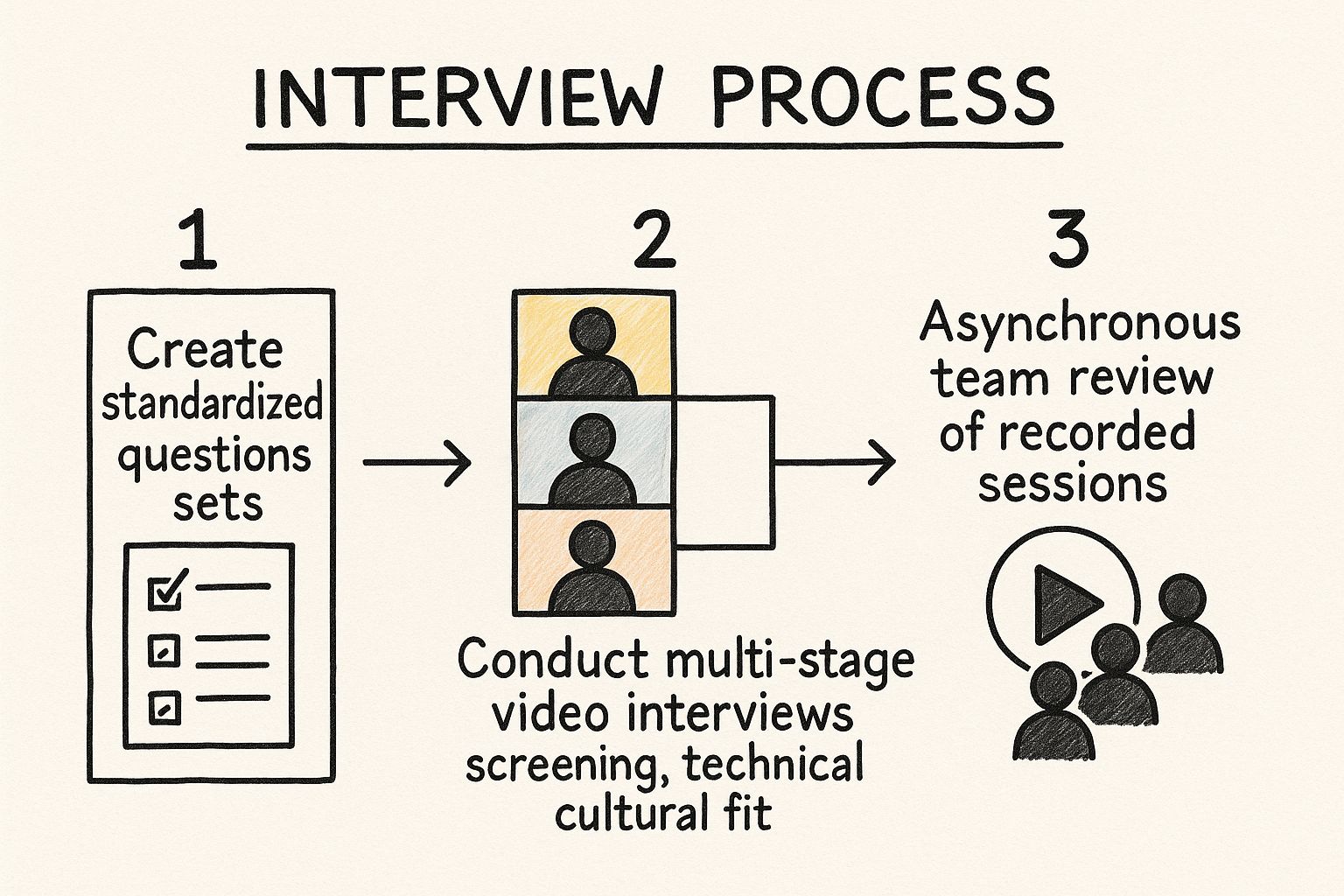
The infographic above visualizes the structured video interviewing process, starting with defining the role and needed skills and ending with making a hiring decision. It highlights the cyclical nature of continuous improvement based on feedback and data analysis, a key element for optimizing the process over time.
This structured process typically involves several key stages:
- Initial Screening: A brief introductory call to assess basic qualifications and cultural fit. This stage can leverage pre-recorded video interviews where candidates respond to predetermined questions, allowing for asynchronous review and efficient screening of a large applicant pool.
- Technical Evaluation: This stage focuses on assessing role-specific skills and knowledge. Work sample tests simulating real-world remote work situations are particularly effective here.
- Cultural Fit Interview: Deeper exploration of the candidate's values, work style, and alignment with the company culture. This often involves conversations with multiple team members to gain diverse perspectives.
This structured approach offers numerous advantages. It reduces geographical hiring limitations, opening your talent pool to a global workforce. The standardized format minimizes unconscious bias, promoting fairer evaluations. Recording sessions allows for asynchronous team review and creates comparable candidate data points for more objective decision-making. Furthermore, the structured and transparent process significantly improves the candidate experience.
However, like any process, it has its challenges. Technology issues can disrupt the flow, and it can be harder to assess non-verbal cues remotely. The process also requires significant upfront preparation and documentation. Scheduling across multiple time zones can also add complexity.
Examples of Successful Implementation:
- GitLab: Known for its transparent and documented interview process, including detailed scorecards for each stage.
- Zapier: Utilizes asynchronous recorded interviews and collaborative evaluation tools to streamline hiring.
- Buffer: Emphasizes a standardized culture-fit interview round to ensure alignment with company values.
Actionable Tips for Implementation:
- Technology Check: Always test your technology beforehand and have backup options in place.
- Clear Instructions: Send detailed instructions to candidates about the process and expectations.
- Collaborative Scoring: Utilize collaborative scoring tools like Greenhouse or Lever.
- Work Sample Tests: Incorporate work sample tests that simulate remote work situations.
- Interviewer Training: Provide comprehensive interview guides and training for all interviewers.
When and Why to Use This Approach:
A structured video interviewing process is particularly beneficial for early-stage startups scaling rapidly, SMBs aiming to reduce hiring costs, and enterprise companies seeking remote expertise. It's also ideal for HR professionals managing global hiring and sales leaders building remote teams. This approach ensures a consistent and scalable hiring process regardless of location, optimizing for quality hires while providing a positive candidate experience.
This approach deserves a place in the list of remote hiring best practices due to its proven effectiveness in streamlining the process, minimizing bias, and ultimately leading to better hiring outcomes in a remote context. By following the tips outlined and learning from successful examples, businesses can significantly enhance their remote hiring strategies and build high-performing distributed teams.
2. Practical Skills Assessment
One of the most effective remote hiring best practices is implementing practical skills assessments. This approach moves beyond evaluating candidates solely on their resumes and theoretical knowledge, instead focusing on demonstrable skills and real-world performance. By using methods like time-boxed take-home assignments, virtual pair programming sessions, or simulated work challenges, you can effectively evaluate a candidate’s ability to thrive in a remote work environment. This method is especially crucial for remote hiring, as it provides a glimpse into a candidate's actual work style and capabilities in a setting similar to the day-to-day realities of the job.

Practical skills assessments offer a variety of features that cater to different roles and requirements. These include time-boxed take-home assignments, which allow candidates to showcase their skills within a defined timeframe; virtual pair programming sessions, enabling real-time collaboration and problem-solving observation; asynchronous project submissions, providing flexibility for candidates in different time zones; simulated remote collaboration tasks, testing communication and teamwork skills; and multiple evaluation touchpoints throughout the process, ensuring a comprehensive understanding of the candidate’s abilities. This approach goes beyond the traditional resume review and interview, providing a more robust and accurate evaluation of a candidate’s suitability for a remote role.
This method deserves its place in the list of remote hiring best practices due to its numerous benefits. It demonstrates actual work capabilities, moving beyond the claims made on a resume. It tests crucial remote work skills like communication, self-management, and proficiency with remote tools and processes. By focusing on output quality, it reduces interview bias and provides a more objective evaluation. Furthermore, the assessment itself offers candidates a realistic preview of the job, improving the chances of a good fit and reducing early attrition.
Examples of successful implementations:
- Automattic: Known for its fully distributed workforce, Automattic utilizes a project-based trial period before formally hiring, allowing candidates to experience the actual work and company culture.
- Doist: The company behind productivity apps like Todoist and Twist employs asynchronous communication assessment challenges, mirroring their own internal communication style.
- InVision: This design platform incorporates a design challenge with a remote presentation component, evaluating both design skills and the ability to effectively communicate design choices remotely.
Tips for Effective Practical Skills Assessments:
- Compensate Candidates: Offer compensation for extensive take-home assignments to acknowledge the candidate’s time and effort, especially for longer trials.
- Set Clear Expectations: Clearly communicate timeframes, deliverables, and evaluation criteria to ensure candidates understand the process and can perform their best.
- Job-Relevant Design: Design assessments that closely reflect the actual job responsibilities, providing valuable insights into a candidate's potential performance.
- Evaluate Communication: Include the evaluation of documentation and communication skills as integral components of the assessment, recognizing their importance in remote work.
- Provide Feedback: Offer detailed feedback to all candidates, regardless of the hiring outcome, fostering a positive candidate experience and offering valuable learning opportunities.
Pros:
- Demonstrates actual work capabilities beyond resume claims.
- Tests remote communication and self-management skills.
- Reduces interview bias by focusing on output quality.
- Reveals how candidates handle remote tools and processes.
- Gives candidates a realistic job preview.
Cons:
- Can create candidate dropoff if too time-consuming.
- May disadvantage candidates with caretaking responsibilities.
- Requires careful design to be inclusive and fair.
- Time zone differences can complicate live assessments.
While there are potential drawbacks, such as potential candidate drop-off if assessments are too time-consuming and the need for careful design to ensure fairness and inclusivity, the advantages of practical skills assessments significantly outweigh the challenges. By incorporating these best practices, companies of all sizes—from early-stage startups to enterprise corporations—can significantly improve their remote hiring processes and build high-performing remote teams. This method is particularly beneficial for companies prioritizing remote sales expertise, allowing them to assess candidates' ability to manage a sales pipeline and close deals effectively in a remote setting. For HR and talent acquisition professionals focused on global hiring, practical skills assessments offer a standardized and objective way to evaluate talent across different locations and time zones. By adopting this approach, companies can effectively evaluate candidates for remote work, contributing to a more successful and productive remote workforce.
3. Remote-Specific Onboarding Systems
One of the most crucial remote hiring best practices is implementing remote-specific onboarding systems. These aren't simply adapted versions of in-person programs; they are comprehensive digital frameworks meticulously designed for remote hires, spanning from the moment of offer acceptance through the critical first 90 days. These systems leverage a combination of technology, documentation, mentorship, and structured milestones to effectively integrate new hires into the company culture and workflow without the benefit of in-person interaction. This is particularly important for early-stage startups, SMBs, and enterprise companies alike, as a strong onboarding process sets the stage for long-term success and reduces early turnover.
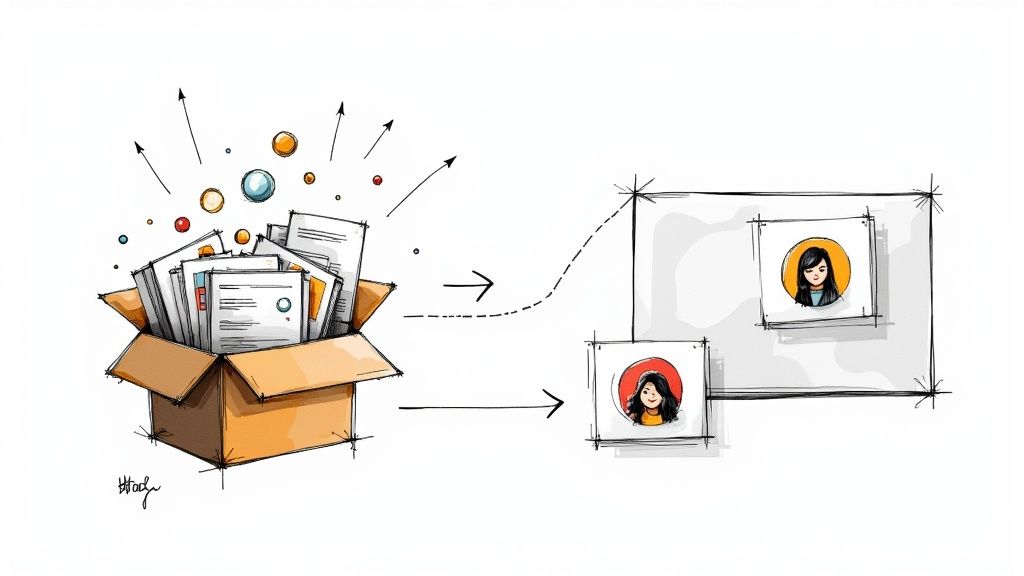
Remote-specific onboarding leverages digital tools and structured programs to create a seamless and engaging experience. Features often include pre-start equipment shipping and setup to ensure new hires have the necessary resources from day one. Digital documentation libraries and wikis act as central repositories for information, policies, and procedures, accessible anytime, anywhere. Structured 30-60-90 day plans provide clear goals and expectations, mapping out a path for success during the initial onboarding period. Virtual mentor/buddy pairing connects new hires with experienced team members, fostering a sense of belonging and providing personalized support. Finally, regular check-in cadence and feedback mechanisms ensure open communication and allow for adjustments along the way.
Examples of Successful Implementation:
- GitLab: Known for its transparent culture, GitLab's publicly accessible onboarding handbook and issue tracker approach offers a prime example of remote onboarding best practices. New hires can follow clearly defined steps, track their progress, and even contribute to improving the process itself.
- Trello: Trello’s onboarding board template system provides a visual and collaborative way to manage the onboarding process, assigning tasks, tracking progress, and ensuring everyone stays informed.
- Hotjar: Hotjar’s 45-day structured remote onboarding program focuses on practical application and quick integration into the team, emphasizing hands-on experience and rapid time-to-productivity.
Actionable Tips for Readers:
- Pre-boarding Welcome Package: Send a welcome package with company swag and a handwritten note before the official start date to create a positive first impression.
- Onboarding Cohorts: When possible, onboard new hires in groups to foster camaraderie and peer learning. This creates a shared experience and encourages connections despite physical distance.
- Asynchronous Video Training: Use asynchronous videos for training materials, allowing new hires to learn at their own pace and revisit information as needed.
- Virtual Coffee Chats: Schedule virtual coffee chats with team members across different departments to help new hires build relationships and understand the broader organization.
- Digital Celebration of Milestones: Publicly acknowledge and celebrate onboarding milestones within the company to reinforce achievements and create a sense of accomplishment.
Pros of Remote-Specific Onboarding Systems:
- Accelerated Time-to-Productivity: Structured plans and readily available resources empower new hires to contribute quickly.
- Consistent Onboarding Experience: Regardless of location, everyone receives the same high-quality onboarding.
- Stronger Social Connections: Intentional connection opportunities combat isolation and foster team cohesion.
- Clear Expectations and Metrics: Defined goals and regular feedback provide a clear path to success.
- Reduced Early Turnover: Comprehensive support and structured guidance increase retention rates.
Cons of Remote-Specific Onboarding Systems:
- Initial Investment: Developing comprehensive documentation and systems requires upfront time and resources.
- Equipment Logistics: Shipping and setting up equipment for remote employees can be complex.
- Time Zone Coordination: Scheduling meetings and training sessions across multiple time zones requires careful planning.
- Potential for Impersonality: Without intentional effort, digital onboarding can feel impersonal.
This approach deserves its place in the list of remote hiring best practices because it directly addresses the unique challenges of integrating remote employees. By investing in robust, remote-specific onboarding, organizations can cultivate a thriving remote workforce, maximize employee engagement, and drive better business outcomes. For HR professionals, sales leaders, and anyone involved in global hiring, implementing these systems is essential for scaling revenue, reducing hiring costs, and building high-performing remote teams.
4. Global Talent Pool Strategies
One of the most powerful remote hiring best practices is developing a robust global talent pool strategy. This approach allows you to source, evaluate, and hire talent across international borders, unlocking access to a significantly wider pool of skilled professionals. While navigating the legal, cultural, and logistical complexities of international hiring may seem daunting, the benefits often outweigh the challenges, especially for growing organizations. This strategy is crucial for companies looking to implement remote hiring best practices and scale efficiently.
How it Works:
Building a global talent pool involves strategically targeting specific countries or regions based on your company's needs and the available talent. This requires understanding local labor laws, cultural nuances, and market compensation rates. Utilizing specialized tools and services can streamline this process. Features integral to a successful global talent pool strategy include:
- Employer of Record (EOR) Services: EORs handle international compliance, payroll, taxes, and benefits, simplifying cross-border employment.
- Geographically Adaptive Compensation Frameworks: Establishing fair and competitive salaries based on local market rates and cost of living is essential.
- Cultural Assessment Methodologies: Implementing tools to assess cultural fit and communication styles can mitigate potential misunderstandings.
- International Background Verification Systems: Ensuring the validity of credentials and experience through reputable international background checks is critical.
- Global Employer Branding Strategies: Adapting your employer brand to resonate with international talent pools is key to attracting top candidates.
Examples of Successful Implementation:
- Shopify: With a workforce distributed across 17+ countries, Shopify demonstrates the power of global talent acquisition in fueling rapid growth.
- Deel: This platform has facilitated global hiring for thousands of companies, showcasing the viability and scalability of international remote teams.
- Automattic: The fully distributed workforce of Automattic, spanning 75+ countries, exemplifies the potential of a truly globalized team.
Pros:
- Access to a Larger, More Diverse Talent Pool: Tap into specialized skills and experience not readily available in your local market.
- Potential Cost Advantages in Certain Markets: Reduce labor costs by hiring in countries with lower average salaries for specific roles.
- Enables 'Follow-the-Sun' Operational Models: 24/7 operations become possible with teams distributed across various time zones.
- Reduces Dependency on Local Talent Markets: Avoid limitations imposed by talent shortages in your immediate area.
- Promotes Organizational Diversity and Perspective: A global workforce brings diverse viewpoints and fosters innovation.
Cons:
- Complexity of International Employment Laws: Navigating different legal landscapes and compliance requirements can be challenging.
- Currency Fluctuation and Payment Challenges: Managing international payments and dealing with currency exchange rates adds complexity.
- Cultural and Communication Barriers: Differences in communication styles and cultural norms can lead to misunderstandings.
- Time Zone Coordination Difficulties: Scheduling meetings and collaborating across multiple time zones requires careful planning.
- Variable Infrastructure (Internet Reliability, Power Stability): Access to reliable internet and power can vary significantly across countries.
Tips for Building a Global Talent Pool:
- Partner with International Employment Experts or EORs: Leverage their expertise to navigate legal and logistical complexities.
- Develop Clear Timezone Overlap Requirements: Define necessary overlap hours for effective collaboration.
- Create Market-Specific Compensation Bands: Offer competitive salaries based on local market rates and cost of living.
- Establish Regional Hiring Hubs with Local Expertise: Gain on-the-ground insights and streamline hiring processes in key regions.
- Build International Candidate Experience Mapping: Tailor your recruitment process to cater to the specific needs and expectations of international candidates.
Why Global Talent Pools Deserve a Place in Remote Hiring Best Practices:
In today's interconnected world, limiting your talent search to a specific geographic location puts your organization at a disadvantage. A global talent pool strategy, while demanding careful planning and execution, is an essential component of remote hiring best practices for companies looking to scale rapidly, access diverse skills, and build a truly globalized team. Platforms like Deel and Remote.com, along with resources like GitLab's transparent global compensation calculator and Oyster HR's international hiring framework, have popularized and simplified the process, making it increasingly accessible for organizations of all sizes. This approach is particularly beneficial for early-stage startups, SMEs looking to reduce costs, enterprise companies seeking global expertise, HR professionals focused on international hiring, and sales leaders building remote teams.
5. Asynchronous Communication Evaluation
Asynchronous communication is the backbone of successful remote work. Therefore, evaluating a candidate's ability to communicate effectively in this medium is a crucial remote hiring best practice. This method assesses how well candidates convey information, collaborate, and problem-solve through written documentation, recorded videos, and other non-real-time channels. This practice provides valuable insights into a critical remote work skill often missed in traditional interviews, making it essential for building high-performing remote teams.
How it Works:
Asynchronous communication evaluation involves setting tasks that mimic real-world remote work scenarios. This might include:
- Written communication assessment tasks: Asking candidates to draft emails, proposals, or reports based on provided briefs. This helps evaluate their writing clarity, conciseness, and professionalism.
- Documentation quality evaluation: Requesting candidates to review and edit existing documentation, or create new documentation for a specific process. This highlights their attention to detail, organizational skills, and ability to create clear and accessible resources.
- Asynchronous video response challenges: Prompting candidates to record video responses to specific questions or scenarios. This allows them to showcase their presentation skills, thought process, and ability to communicate effectively without immediate feedback.
- Time-separated collaboration exercises: Assigning collaborative projects where candidates contribute and provide feedback asynchronously. This assesses their ability to work effectively within a remote team environment and manage their time efficiently.
- Clear writing sample requirements: Asking for pre-existing writing samples, such as blog posts or published articles, can provide additional insight into a candidate's communication style and expertise.
Why This Approach is Essential for Remote Hiring:
This method directly tests a crucial remote work skill, revealing a candidate's thought clarity, organizational ability, and self-direction capabilities. It also reduces bias toward extroverted personalities, providing a more level playing field for all candidates. By simulating actual remote work conditions, you gain a more accurate understanding of how a candidate will perform in a distributed environment.
Pros:
- Directly tests a crucial remote work skill
- Reveals thought clarity and organizational ability
- Demonstrates candidate self-direction capabilities
- Reduces bias toward extroverted personalities
- Simulates actual remote work conditions
Cons:
- May disadvantage candidates with stronger verbal skills
- Difficult to standardize evaluation criteria
- Can be time-consuming to assess thoroughly
- Requires careful instruction design
Examples of Successful Implementation:
- Doist, known for its remote-first culture, uses a writing-focused application process.
- Buffer incorporates an asynchronous challenge round to evaluate communication skills.
- WordPress.com utilizes a text-based interview stage in their hiring process.
Tips for Effective Implementation:
- Use realistic scenarios from your team's workflow.
- Evaluate turnaround time and follow-up questions.
- Assess clarity, completeness, and tone appropriately.
- Look for proactive communication and question-asking.
- Include documentation formatting and organization in your evaluation.
Building a strong remote team hinges on effective communication. As your team grows and collaborates asynchronously, understanding best practices becomes even more important. For valuable insights and strategies, consider this comprehensive guide on asynchronous communication best practices from Bulby. Effective asynchronous communication is crucial for remote teams. Check out this comprehensive guide on asynchronous communication best practices to ensure your team stays connected and productive.
Popularized By:
Doist's asynchronous communication philosophy, Basecamp's written communication emphasis, and GitLab's handbook-first approach have all contributed to the popularization of asynchronous communication evaluation in remote hiring best practices. By incorporating this method into your hiring process, you can identify candidates who thrive in remote environments and contribute effectively to a distributed team.
6. Virtual Culture Fit Assessment
One of the most crucial remote hiring best practices is the virtual culture fit assessment. This process utilizes specialized techniques to evaluate how well a candidate aligns with your company culture, even without in-person interaction. It's essential for building strong remote teams that thrive in a distributed environment. This is especially critical for early-stage startups, SMBs, and enterprise companies expanding their remote workforce, as a poor cultural fit can significantly impact productivity, communication, and overall team cohesion. For HR professionals, sales leaders, and anyone involved in global hiring, mastering this practice is key to long-term success.
How it Works:
Virtual culture fit assessment moves beyond traditional interviewing and focuses on understanding how a candidate would integrate into a remote team. This often involves a multi-faceted approach, incorporating:
- Virtual Team Social Events with Candidates: Informal virtual gatherings (like coffee breaks or online games) allow candidates to interact with potential teammates in a relaxed setting, offering a glimpse into the team's dynamics and communication style.
- Values-Based Structured Interview Questions: Asking questions that directly relate to your company's core values helps assess a candidate's alignment with your mission and principles. For example, if "transparency" is a core value, you might ask about a time they had to deliver difficult feedback.
- Culture Ambassadors Program: Designating specific team members as "culture ambassadors" provides candidates with dedicated points of contact to answer culture-related questions and offer insights into the company’s remote work environment.
- Simulated Remote Team Scenarios: Presenting candidates with hypothetical work situations they might encounter in a remote setting allows you to observe their problem-solving skills, communication style, and collaboration approach within a virtual context.
- Transparent Company Culture Documentation: Providing candidates with readily accessible materials that outline your company's values, remote work policies, and team norms allows for self-selection and ensures everyone is on the same page from the start.
Examples of Successful Implementation:
- Buffer: Known for their value-focused hiring, Buffer incorporates a dedicated interview round specifically designed to assess cultural alignment with their core values.
- Hotjar: Utilizes 'meet the team' virtual coffee sessions to give candidates an opportunity to connect with potential colleagues informally and get a feel for the team’s personality.
- InVision: Has implemented remote culture simulation days where candidates experience a simulated workday to get a more realistic understanding of the company’s remote work environment.
Tips for Effective Virtual Culture Fit Assessment:
- Define and Document Your Remote Culture Explicitly: Clearly articulate your company’s values, communication style, and expectations for remote work.
- Create Standardized Cultural Assessment Rubrics: Develop clear criteria for evaluating candidates' cultural fit to minimize subjectivity and ensure consistency across the hiring team.
- Involve Team Members from Diverse Backgrounds: Including a diverse group in the assessment process helps avoid homogeneity and promotes a more inclusive culture.
- Balance Structured and Unstructured Interaction: Combine structured interviews with informal social interactions to get a well-rounded view of the candidate.
- Separate Cultural Fit from Technical Assessment: Evaluate technical skills and cultural fit independently to avoid bias and ensure a fair assessment of both.
Pros:
- Reduces poor culture fit hiring mistakes, saving time and resources in the long run.
- Helps candidates self-select out if they don't align with your culture.
- Creates multiple assessment touchpoints, providing a more comprehensive understanding of the candidate.
- Evaluates remote-specific cultural factors like communication style and collaboration in a virtual environment.
- Builds connection and rapport before employment even begins.
Cons:
- Can be subjective without clearly defined evaluation criteria.
- Risk of creating a homogenous culture if not balanced with diversity and inclusion goals.
- Requires a significant time investment from team members.
- Simulated interactions may not perfectly reflect the day-to-day reality of working remotely.
Virtual culture fit assessment is crucial for remote hiring best practices because it addresses the unique challenges of building a cohesive and productive team in a distributed environment. By implementing these techniques, companies can significantly improve the likelihood of hiring candidates who thrive in their remote work culture and contribute positively to the overall team dynamic.
7. Remote-First Employer Branding
In today's competitive hiring landscape, especially when focusing on remote talent, simply posting a job description isn't enough. You need to actively cultivate a remote-first employer brand. This is a crucial element of remote hiring best practices, attracting top-tier remote talent and establishing your company as a leader in the distributed work sphere. Remote-first employer branding goes beyond simply stating you offer remote work; it strategically showcases the benefits, practices, and culture that make your organization a desirable place to work remotely. This authentic preview of your remote work experience attracts candidates already aligned with this lifestyle and differentiates you from competitors with less developed remote practices. This approach is particularly relevant for early-stage startups, SMBs, and enterprise companies seeking to efficiently scale and reduce hiring costs by leveraging a global talent pool. It's also invaluable for HR professionals, talent acquisition teams, and sales leaders building high-performing remote teams.
Here's how to implement a powerful remote-first employer brand:
What it is and How it Works:
Remote-first employer branding involves intentionally crafting and communicating your company's remote work philosophy and showcasing the unique advantages you offer. It's about demonstrating, not just telling, potential hires what it's really like to work for your company remotely. This requires transparency and authenticity, going beyond generic perks to highlight the day-to-day realities and benefits of your distributed team environment.
Features of Effective Remote-First Employer Branding:
- Remote-Specific Benefits and Perks Communication: Clearly articulate the benefits tailored to remote employees, such as flexible schedules, home office stipends, or co-working allowances.
- Virtual Workplace Tours and Day-in-the-Life Content: Offer glimpses into the remote work experience through videos, blog posts, or social media updates showcasing how your team collaborates and thrives in a distributed setting.
- Distributed Team Member Spotlights: Feature interviews or profiles of existing remote employees, highlighting their experiences, career progression, and work-life integration within the company.
- Transparent Remote Work Policies and Documentation: Publicly accessible documentation (like a remote work handbook) demonstrates your commitment to remote work and provides clarity for potential candidates.
- Virtual Community Building Events for Prospects: Host online events to connect with potential candidates, answer their questions, and showcase your company culture.
Examples of Successful Implementation:
- GitLab: Their comprehensive public handbook on remote work (about.gitlab.com/handbook/), serves as a gold standard for transparency and provides an in-depth look into their remote-first culture.
- Spotify: Their "Work From Anywhere" program marketing effectively communicates their flexible work model and the benefits it provides to employees.
- HubSpot: Their remote culture blog and social media showcases offer engaging glimpses into the lives of their remote team members.
Pros:
- Attracts candidates pre-aligned with remote work, reducing turnover.
- Differentiates your company from competitors.
- Provides an authentic preview of the work experience, setting clear expectations.
- Improves application quality and reduces volume by pre-qualifying candidates.
- Leverages your existing team as authentic brand advocates.
Cons:
- Requires dedicated resources for content creation and maintenance.
- Must be genuinely aligned with actual practices to maintain credibility.
- Needs regular updates to reflect evolving remote work practices.
- Can create expectations that must be consistently met.
Actionable Tips:
- Document your remote work philosophy and practices publicly: Consider creating a dedicated remote work page on your website or a public-facing handbook.
- Feature authentic team member stories across channels: Use video, blog posts, and social media to showcase the diverse experiences within your remote team.
- Showcase your remote work tools and technology stack: Demonstrate your commitment to providing employees with the best resources for successful remote work.
- Highlight remote-specific career development pathways: Show potential hires how they can grow and advance their careers within your remote-first organization.
- Be transparent about challenges along with benefits: Authenticity builds trust and attracts candidates who are truly a good fit for your culture.
By strategically embracing remote-first employer branding as a core remote hiring best practice, you can attract, engage, and retain top-tier distributed talent, building a thriving and productive remote workforce.
7 Best Practices Comparison Guide
| Best Practice | ⭐ Expected Outcomes / Quality | 🔄 Implementation Complexity | ⚡ Resource Requirements | 💡 Ideal Use Cases | 📊 Key Advantages |
|---|---|---|---|---|---|
| Structured Video Interviewing Process | High consistency, fairness, clear candidate data | Moderate to High (multi-stage, prep) | Significant (training, tech setup) | Roles needing standardization & fairness | Minimizes bias, enables asynchronous review |
| Practical Skills Assessment | Demonstrates true work ability, realistic preview | Moderate (design & evaluation needed) | Moderate (assignments, compensation) | Technical/skill-based remote roles | Focus on output, reduces bias based on resumes |
| Remote-Specific Onboarding Systems | Faster productivity, better integration | High (documentation, scheduling) | High (equipment, mentoring) | New remote hires, complex roles | Consistent experience, reduces early turnover |
| Global Talent Pool Strategies | Access to diverse talent, operational flexibility | High (legal, cultural complexity) | High (expertise, compliance tools) | Organizations scaling globally | Expands talent pool, enables 24/7 ops |
| Asynchronous Communication Evaluation | Tests essential remote comms skill | Moderate (design & review focus) | Moderate (assessment prep & eval) | Roles requiring strong written comms | Reveals clarity, reduces extrovert bias |
| Virtual Culture Fit Assessment | Better cultural alignment, multiple touchpoints | Moderate (coordination & design) | Moderate to High (team involvement) | Teams valuing strong culture fit | Reduces poor hires, builds early connection |
| Remote-First Employer Branding | Attracts aligned candidates, quality over quantity | Moderate to High (content creation) | Moderate to High (marketing effort) | Organizations wanting strong remote presence | Differentiates brand, authentic candidate preview |
Building Your Dream Remote Team: Putting it All Together
Mastering remote hiring best practices is no longer a luxury, but a necessity for businesses of all sizes looking to thrive in today's dynamic landscape. Throughout this article, we've explored key strategies for building a successful remote team, from structured video interviewing and practical skills assessments to establishing remote-specific onboarding systems and fostering a strong virtual culture. We’ve also highlighted the importance of tapping into a global talent pool, evaluating asynchronous communication skills, and building a remote-first employer brand. By implementing these core principles, you can significantly improve your ability to identify, attract, and retain top-tier remote talent.
The most important takeaways from these remote hiring best practices are the emphasis on structured processes and a remote-first mindset. By weaving these elements into your hiring strategy, you create a consistent and positive candidate experience, ultimately leading to a higher quality of hires and a more engaged remote workforce. This not only reduces hiring costs but also fuels revenue growth by enabling you to build high-performing teams composed of individuals who truly thrive in a remote environment.
Building a world-class remote team is an achievable goal for any organization willing to embrace these best practices. The future of work is distributed, and by investing in the right strategies, you can position your business for long-term success in the increasingly competitive global talent market. Ready to streamline your international remote hiring process and connect with pre-vetted sales professionals? Explore AboutHire, a specialized platform designed to simplify global talent acquisition and help you build your dream remote sales team. AboutHire provides the tools and resources you need to implement these remote hiring best practices efficiently and effectively.