Why Smart Companies Are Going All-In on Remote Sales
The business world is constantly evolving, and successful companies are adapting by embracing remote sales teams. It's not just about saving money on office space (although that's a nice bonus!). The real benefits lie in improved performance and access to a wider pool of talent. I've personally connected with several sales VPs who made the switch, and they consistently report quicker deal closures and better employee retention within their distributed teams. A happy salesperson is a productive salesperson, right?
This move toward remote work isn't a fad; it's a real shift in how we work. Building a remote sales team has become incredibly popular, driven by the global move to remote work. By 2025, a projected 32.6 million Americans will work remotely, a significant jump in remote opportunities. This trend is global: remote digital positions are estimated to reach 90 million worldwide by 2030, up from 73 million in 2024. Discover more insights on remote work trends.
One major advantage is tapping into a global talent pool. Instead of being limited to local applicants, you can find the best salespeople no matter where they live. This unlocks access to specialists with niche expertise and allows you to build a team that spans multiple time zones, providing 24/7 coverage for your clients. This around-the-clock availability offers a serious competitive edge. Imagine closing deals while your competitors are still asleep!
The Competitive Edge of a Distributed Team
Beyond access to a larger talent pool, remote teams often outperform traditional office-based teams. I've witnessed this firsthand. They're frequently more focused, results-oriented, and less caught up in office distractions. The flexibility of remote work boosts employee morale and reduces burnout, which in turn leads to higher retention rates. It’s a win-win situation. You get to keep your star players, and they achieve the work-life balance they desire.
Let's take a look at some key performance indicators to illustrate these advantages:
To give you a clearer picture, I've put together a table comparing key performance indicators between remote and traditional sales teams:
Remote vs Traditional Sales Team Performance Metrics
| Metric | Remote Teams | Traditional Teams | Difference |
|---|---|---|---|
| Average Deal Size | Often Higher (Due to broader reach and specialized expertise) | Can be limited by local market conditions | Potential for significant increase with remote teams |
| Deal Cycle Time | Often Faster (24/7 availability & focused work) | Can be slower due to logistical constraints | Remote teams can streamline the process |
| Employee Retention Rate | Typically Higher (Better work-life balance & flexibility) | Can be lower due to burnout and lack of flexibility | Remote work can significantly improve retention |
| Lead Response Time | Often Faster (Increased availability & responsiveness) | Can be delayed depending on staffing levels | Remote teams offer greater agility in lead response |
As you can see, the potential for increased deal size, faster deal cycles, and higher employee retention makes a strong case for remote sales teams.
Building a remote sales team requires a different strategy compared to traditional hiring. It's about finding people who excel in independent environments, are self-motivated, and have excellent communication skills. More on that later! But for now, understand this: embracing a remote sales model is no longer a "nice-to-have" but a "must-have" for companies that want to remain competitive and succeed in today’s market.
Spotting Remote Sales Talent Before Your Competitors Do

Building a top-notch remote sales team? It’s a different beast than traditional hiring. Forget the polished resumes and perfectly rehearsed answers. You need people who can truly thrive working independently. Think self-discipline, killer communication skills, and the ability to hustle without someone looking over their shoulder. It's a whole new ballgame.
The explosion of remote work has reshaped the sales landscape. Remote sales opportunities are booming. Think about it: remote jobs used to be just 4% of U.S. job opportunities. Now? Over 15% as of 2025. That's a massive jump and tells you everything you need to know about adapting your hiring strategy. Want to dive deeper into these trends? Check this out: Discover more insights on remote work trends.
Unconventional Places to Find Top Talent
Ditch the usual job boards (at least some of the time). Seriously. Think outside the box. Online sales communities, niche industry forums, even LinkedIn can be goldmines for finding hidden gems. Look for people actively participating in discussions, sharing insightful content, and showing a real passion for sales. Those are your people.
Another pro tip? Partner with a specialized remote recruitment agency like AboutHire. They often have a network of pre-vetted candidates with proven remote sales experience. This can save you tons of time and headaches. Curious about their process? You might be interested in: AboutHire's sales recruitment process.
Interview Techniques for Remote Sales Success
Once you've got some promising candidates, the interview process is key. Don't just rehash their resume. Dig into how they handle the unique challenges of remote sales: autonomy, dealing with rejection, and selling effectively through a screen.
Here are a few questions I like to ask:
- "Tell me about a tough sales objection you faced remotely. How did you handle it?"
- "How do you stay motivated and organized when working independently?"
- "What are your strategies for building rapport with clients virtually?"
These questions give you a real glimpse into their work style and if they're a good fit for a remote environment.
Recognizing Red and Green Flags
Look for green flags like proven time management skills, proactive communication, and a genuine desire to keep learning. These are essential for remote sales success.
On the flip side, watch out for red flags: lack of self-awareness, poor communication, and resistance to new tech. These can signal trouble in a remote setting. By focusing on these key traits, you can snag the best remote sales talent before your competitors even know they exist.
Compensation Packages That Actually Retain Top Performers
Let's be honest, compensation is a big deal. Too many companies building remote sales teams stick to the same old salary-plus-commission structure and wonder why their best people leave. If you want to keep your A-players, you need to think outside the box.
One crucial factor is understanding market value. The remote sales world is constantly changing, with specialized roles and different industries all vying for the best talent. For example, top enterprise Account Executives in remote sales can earn upwards of $600,000+ in total compensation. Even entry-level positions are becoming increasingly competitive. Check out these sales compensation insights. This kind of data shows how important it is to keep up with current salary trends. You have to be competitive if you want to attract and, more importantly, retain the best.
Creative Incentive Structures That Work
Throwing money at the problem isn't enough. You need to be strategic about how you structure your compensation packages. Consider performance-based bonuses, profit-sharing, and even equity for key roles. These incentives not only reward high achievers, they also connect their success directly to the company's growth. Everyone wins.
I've personally seen companies offer unique perks like flexible work schedules, extra vacation time, and home office stipends. These might seem like small things, but they show you value your team's well-being, and that can make a huge difference in whether they stay or go.
To give you a better sense of market rates, take a look at this table:
Remote Sales Compensation Benchmarks by Role
Salary ranges and commission structures for different remote sales positions
| Role | Base Salary Range | Commission % | Total Comp Potential |
|---|---|---|---|
| Sales Development Rep (SDR) | $50,000 – $70,000 | 5% – 10% | $75,000 – $100,000 |
| Account Executive (AE) | $80,000 – $120,000 | 10% – 15% | $150,000 – $250,000 |
| Sales Manager | $120,000 – $180,000 | 5% – 10% | $180,000 – $300,000 |
| Enterprise Account Executive | $150,000 – $200,000 | 15% – 20% | $300,000+ |
This table gives you a general idea of the compensation landscape. Remember, these are just ranges, and actual salaries can vary based on experience, location, and company size.
Navigating the Nuances of Distributed Teams
Paying remote teams in different locations can be complicated. You have to think about different tax laws, cost of living adjustments, and even currency conversions. Don’t let these details become a headache. Talk to a compensation expert or use resources like AboutHire, which specializes in navigating these complexities for international remote teams.
Equity can be a powerful tool for keeping your team engaged, especially for startups. Giving your team a piece of the company makes them invested in its long-term success. But be smart about how you structure it. Think about vesting schedules and clearly communicate how that equity could potentially grow in value. Transparency is essential.
Non-Monetary Benefits That Matter
Finally, don't forget the impact of non-monetary benefits. Offering professional development opportunities, mentorship programs, and even virtual team-building activities can make a real difference. These perks show you're investing in your team's growth and creating a sense of community, even when everyone is working from different places. This fosters a positive and supportive environment where people feel valued and want to stick around. Building a remote sales team isn’t just about finding talent; it’s about creating a culture where that talent thrives.
Getting New Hires Productive Fast (Without Overwhelming Them)
Onboarding remote sales hires? Trust me, I've seen incredibly talented salespeople fizzle out within the first month simply because the onboarding process was a mess. A well-structured onboarding program is absolutely key – it can be the difference between a new hire thriving in weeks or struggling for months.
Building a remote sales team comes with its own set of onboarding challenges. How do you effectively train them on your product, build those crucial team relationships, and instill your sales methodology when everyone's scattered across the globe? It’s a question I get asked a lot, and the answer lies in finding a balance: structured, yet flexible. You need to provide support without micromanaging and suffocating your new hires.
Onboarding Frameworks That Actually Work
The most successful remote sales teams rely on onboarding frameworks that emphasize both knowledge transfer and relationship building. Think about it: for product knowledge, interactive online modules, short explainer videos, and even virtual reality product demos (if you have them!) are way more engaging than throwing endless PDF documents at them.
When it comes to building connections, get creative! Set up virtual coffee breaks, organize online team-building activities, and consider implementing a buddy system. Even these small gestures can make a huge difference in fostering a sense of belonging.
Avoiding Common Onboarding Mistakes
One of the biggest onboarding blunders is information overload. Resist the urge to cram everything into the first week. Instead, opt for a phased approach. Start with the absolute essentials they need to know right now and gradually introduce more complex topics as they gain confidence and experience.
Another common mistake is neglecting the social side of onboarding. Remember, you’re building a team, even if everyone is miles apart. Encourage collaboration and communication from day one. Trust me, this will pay off big time later. You might find AboutHire's guide on best practices for remote onboarding helpful.
Balancing Structure with Flexibility
Remote sales requires a certain level of independence. Your onboarding should reflect that. While structure is essential, empower your new hires to explore, ask questions, and find their own groove. This means setting clear expectations while allowing for flexibility in how they meet those expectations.
Regular check-ins are vital, but remember, it’s not about micromanaging. It’s about offering support and guidance. Use these check-ins to address any roadblocks they've encountered, provide constructive feedback, and celebrate those early wins. A little encouragement can go a long way!
Creating Accountability Without Micromanaging
So, how do you create accountability without constantly looking over their shoulders? Focus on outcomes, not activity. Set clear performance goals, provide the tools and resources they need to succeed, and then step back and let them do their thing.
Building a remote sales team is all about finding people who are self-motivated and thrive in an independent environment. Trust them to manage their time effectively and deliver results. Your onboarding process should empower them to do just that.

The Technology Stack That Actually Drives Results

Let's talk tech. Building a remote sales team can feel like navigating a maze of software options. Truthfully, a lot of them are just shiny distractions that drain your budget. I've witnessed firsthand how the right tech can truly boost a remote team's performance, while the wrong choices can lead to headaches and wasted time. The goal is to give your team the tools they need to succeed, not burden them with unnecessary complexity.
Essential Tools for Remote Sales Success
First and foremost, a solid CRM (Customer Relationship Management) system is absolutely essential. But just having one isn’t enough. It needs to be actively used and woven into your team's daily workflow. Look for a CRM like Salesforce or HubSpot that offers automation, detailed reporting, and smooth integration with other tools.
Communication is also paramount in a remote setting. A dependable platform for video conferencing, instant messaging, and file sharing is mission-critical. Consider tools like Slack, Microsoft Teams, or Google Workspace. Find what clicks with your team's communication style and fits seamlessly into your existing systems.
Leveraging Automation and AI
Automation can be a real game-changer for remote sales teams. Think about automating those repetitive tasks that eat up valuable time, like lead qualification, follow-up emails, and even scheduling appointments. This frees up your team to focus on their strengths: building relationships and closing deals. And don't forget the importance of training! Make sure your remote workers have the resources they need to feel confident and prepared. This resource on training remote employees might be helpful.
AI-powered tools are also becoming increasingly prevalent. These tools can assist with tasks like lead scoring, personalized outreach, and sales forecasting. While AI can be a powerful asset, concentrate on tools that enhance your team's abilities, not replace them. The human element is still incredibly important in sales.
Measuring ROI and Avoiding Distractions
Remember, not all tech is created equal. I've seen companies pour money into fancy software that ends up being completely unused. Before investing in the latest tech trend, ask yourself two crucial questions: "Does this directly support our sales goals?" and "Will our team actually use this?"
Track important metrics like lead conversion rates, deal close rates, and sales cycle length to gauge the true impact of your tech investments. If a tool isn't providing a clear return on investment, it's time to let it go. Concentrate on the tools that actually make a difference. Building a remote sales team requires a strategic approach to technology. Choose tools that empower your team, automate tedious tasks, and provide valuable insights. By focusing on the right tech, you can build a highly productive and successful remote sales force.
Managing for Results (Not Activity Reports)
Managing a remote sales team really flips the traditional management script. Forget micromanaging and obsessing over those activity reports. Honestly, who even likes those? Instead, focus on the things that actually move the needle: results. This shift in mindset requires trust, clear communication, and the right tools. From my experience, concentrating on outcomes instead of just busywork can transform a team from average performers into a real powerhouse.
Building a remote sales team presents its own set of management puzzles. You're dealing with people across different time zones, with varying work styles, and the ever-present potential for them to feel isolated. It's easy to fall into the trap of tracking every minute of their day, but that's a guaranteed morale killer and it stifles creativity.
Coaching for Remote Success
Coaching in a virtual environment means tweaking your approach. Instead of those quick hallway chats, schedule regular video calls that focus on individual performance and professional development. Use screen sharing features in tools like Zoom to review calls together, discuss strategies, and provide real-time feedback. I've found that a collaborative approach to coaching, rather than just top-down direction, builds trust and empowers remote team members to really own their performance.
Running Effective Remote Sales Meetings
Meetings can be a real productivity drain, especially for remote teams. Make yours count. Have a clear agenda, encourage active participation, and use collaborative tools like Slack or Microsoft Teams to keep everyone engaged. I like to kick off meetings with a quick icebreaker or a fun team-building activity to build connections. It might seem small, but these little things go a long way in building rapport and keeping the team feeling close-knit.
Maintaining Team Culture Across Distances
Building a strong team culture when everyone is geographically dispersed takes consistent effort. Regular virtual team-building activities, online social events, and even just celebrating wins together – big or small – can help foster a sense of community. I've seen companies create “virtual water coolers” – dedicated Slack channels or online spaces where team members can chat about non-work stuff, share interesting articles, or just catch up. It helps replicate those informal interactions that happen organically in a physical office.
To get even better results from your remote team, explore different Sales Automation Examples. Automation can free up your team's time, allowing them to focus on more high-value activities like building relationships and closing deals.
Tracking Performance and Identifying Early Warning Signs
Use key performance indicators (KPIs) like conversion rates, deal size, and customer lifetime value to track progress. A good CRM system (like Salesforce or HubSpot) provides real-time visibility into sales activity and pipeline health. This lets you identify potential problems early on and provide support before they snowball into major issues. For more in-depth advice, check out our guide on how to manage a remote sales team. Remember, successful remote team management is all about empowering your team to achieve results, not monitoring their every move. By fostering trust, encouraging open communication, and focusing on the things that truly drive revenue, you can build a high-performing remote sales engine that consistently crushes its targets.
Your Implementation Roadmap for Remote Sales Success
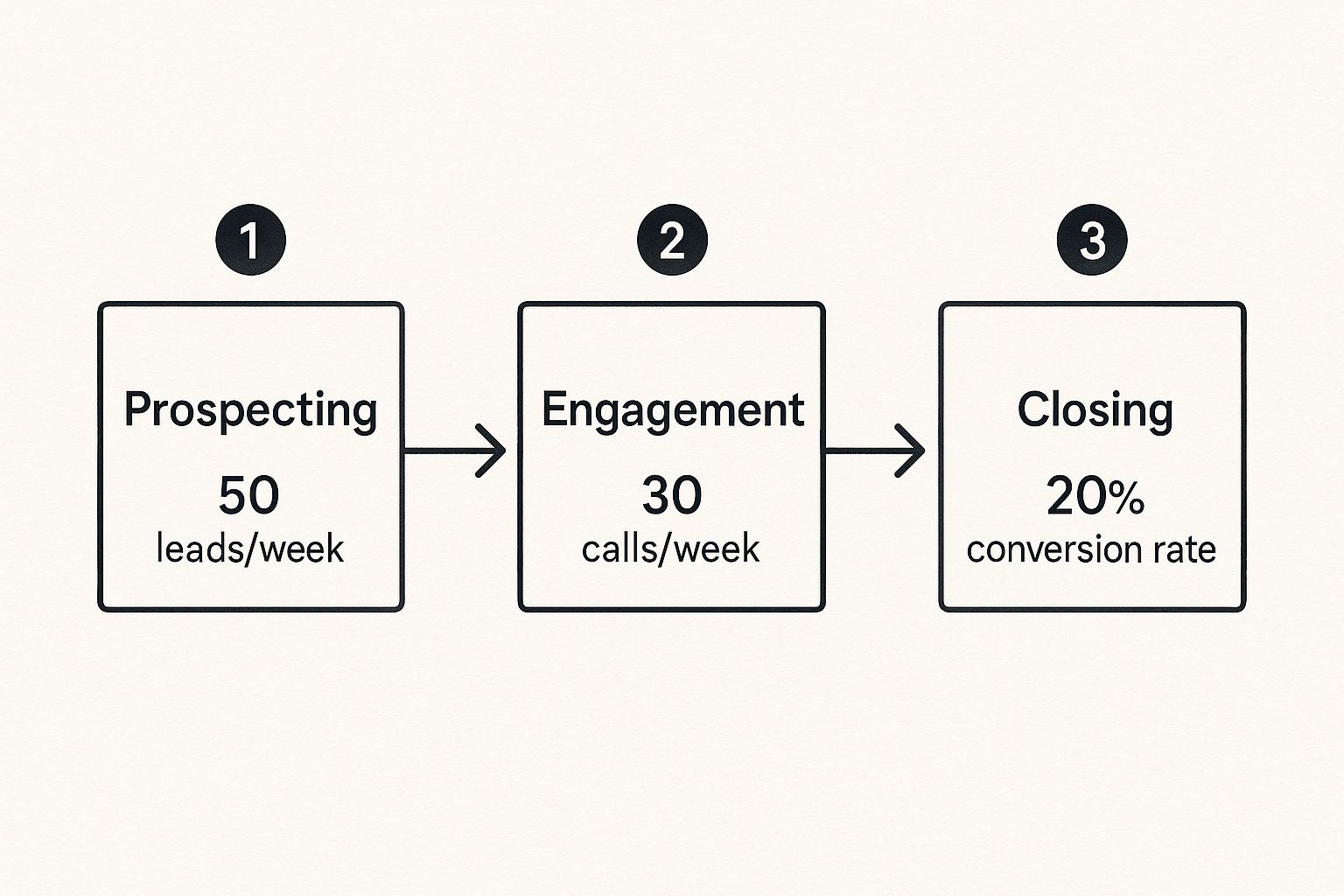
This infographic gives you a snapshot of what a high-performing remote sales team can look like. It lays out the process from finding leads to closing deals, with target metrics like 50 leads per week, 30 sales calls, and a 20% conversion rate. Hitting these numbers consistently builds a predictable sales pipeline and revenue stream – something every business wants.
Building a remote sales team isn’t something you do once and then forget about. It's an ongoing process of planning, execution, and tweaking. Empowering and supporting a distributed team is essential, and you can find some great advice on that here. Begin by defining what you actually want to achieve. Is it grabbing more market share, speeding up sales cycles, or lowering customer acquisition costs? Having clear, measurable goals is the first step.
Phased Rollout and Budgeting
Don't try to boil the ocean. A phased rollout is key. Start small, maybe with a pilot team in a specific region or focused on a single product line. This approach lets you iron out kinks and learn what works before going all-in. From experience, I can tell you that scaling gradually minimizes risk and allows for valuable course correction along the way.
Budgeting deserves its own conversation. It’s more than just salaries and commissions. Think about tech costs, training, and ongoing support. Hidden costs can pop up, like equipment, software licenses, or co-working stipends for your team. Do your homework and plan accordingly.
Tracking Progress and Continuous Improvement
How do you know if you’re on the right track? Set milestones and regularly check your progress against your initial goals. Are you hitting your hiring targets? Is your onboarding program getting new hires up to speed quickly? Most importantly, are your sales reps meeting their quotas? Honest assessment is vital for improvement.
Building a successful remote sales team is a marathon. It takes time, effort, and constant learning. But by focusing on these key steps, you can create a real sales powerhouse that delivers lasting results.
Ready to skip the headache of building a remote sales team from scratch? AboutHire connects you with top-tier remote sales talent from Latin America and Europe, saving you up to 70% in hiring costs. Let us help you build the team you’ve been dreaming of.