Why Most Sales Teams Fail Before They Even Start

Let's be honest: 73% of sales teams are built around internal processes, not the customer. This creates a disconnect between how you sell and how customers buy. Imagine a customer trying to make a complex purchase, getting passed around like a hot potato between different reps, each with their own version of the story. Frustrating, right? Deals die this way. It's like trying to build a house without a blueprint – sure, you’ll have something, but it won't be pretty (or functional).
This isn't about pointing fingers at individual salespeople. Even the best reps can't overcome a fundamentally flawed system. Think of a basketball team packed with all-stars, but no game plan. They might have some flashy plays, but they won't win consistently. The same goes for sales – a poorly structured team might close a few deals, but they'll miss targets and struggle to grow.
The Hidden Costs of a Broken Structure
The cost of a poorly structured sales team goes way beyond missed quotas. It's a chain reaction. You lose deals, morale tanks, and your best people walk out the door, taking valuable knowledge with them. Then you're stuck in a constant cycle of hiring and training, burning through resources that could be used to actually grow your business. It's a painful, expensive loop.
Building a winning sales team isn't about throwing people into roles and hoping for the best. It takes planning and a real understanding of sales data. Before even thinking about scaling, teams need to honestly assess their current setup, sales process, and training program. Make sure they match up with reality. For example, 42% of salespeople say prospecting is the hardest part of their job, highlighting the need for the right tools and strategies. And even though 80% of prospects prefer email, follow-up is often weak. 92% of reps give up after just four attempts! This points to the need for a solid, repeatable sales process and standardized onboarding. Discover more insights about scaling your sales team.
Shifting the Mindset: From Internal Focus to Customer-Centricity
The best sales teams get it: their structure has to mirror the customer journey. They focus on understanding customer needs and pain points, building their entire process around providing solutions. This customer-centric approach helps reps become trusted advisors, building real relationships that lead to long-term partnerships. This isn't just shuffling existing roles around; it’s about rebuilding the entire sales process with the customer at the center.
This shift requires a commitment to always improving and adapting. It means regularly checking your structure and making changes based on market feedback, performance data, and changing customer needs. By putting the customer first and building a structure that supports them, you create a sales engine that generates revenue no matter what the market does. This is how you turn your sales team from a cost center into a revenue machine.
Let's take a look at the impact a customer-centric approach can have. The table below compares traditional and modern sales team structures, highlighting key performance differences.
| Metric | Traditional Structure | Modern Structure | Improvement % |
|---|---|---|---|
| Lead Conversion Rate | 15% | 25% | 67% |
| Customer Retention Rate | 60% | 80% | 33% |
| Sales Cycle Length | 60 days | 45 days | 25% |
| Average Deal Size | $5,000 | $7,500 | 50% |
| Revenue Growth | 10% YoY | 25% YoY | 150% |
As you can see, a modern, customer-centric structure can dramatically improve key metrics. From faster sales cycles and bigger deals to higher customer retention, focusing on the customer pays off.
Finding Your Perfect Sales Structure Match
Not every sales structure works for every business. Copying another company's winning formula can backfire spectacularly. I've seen it happen firsthand – a fast-growing startup tried to mimic a Fortune 500's complex, layered sales team, and it completely choked their momentum. They were so focused on looking the part, they forgot to build a system that actually worked for their customers and product.
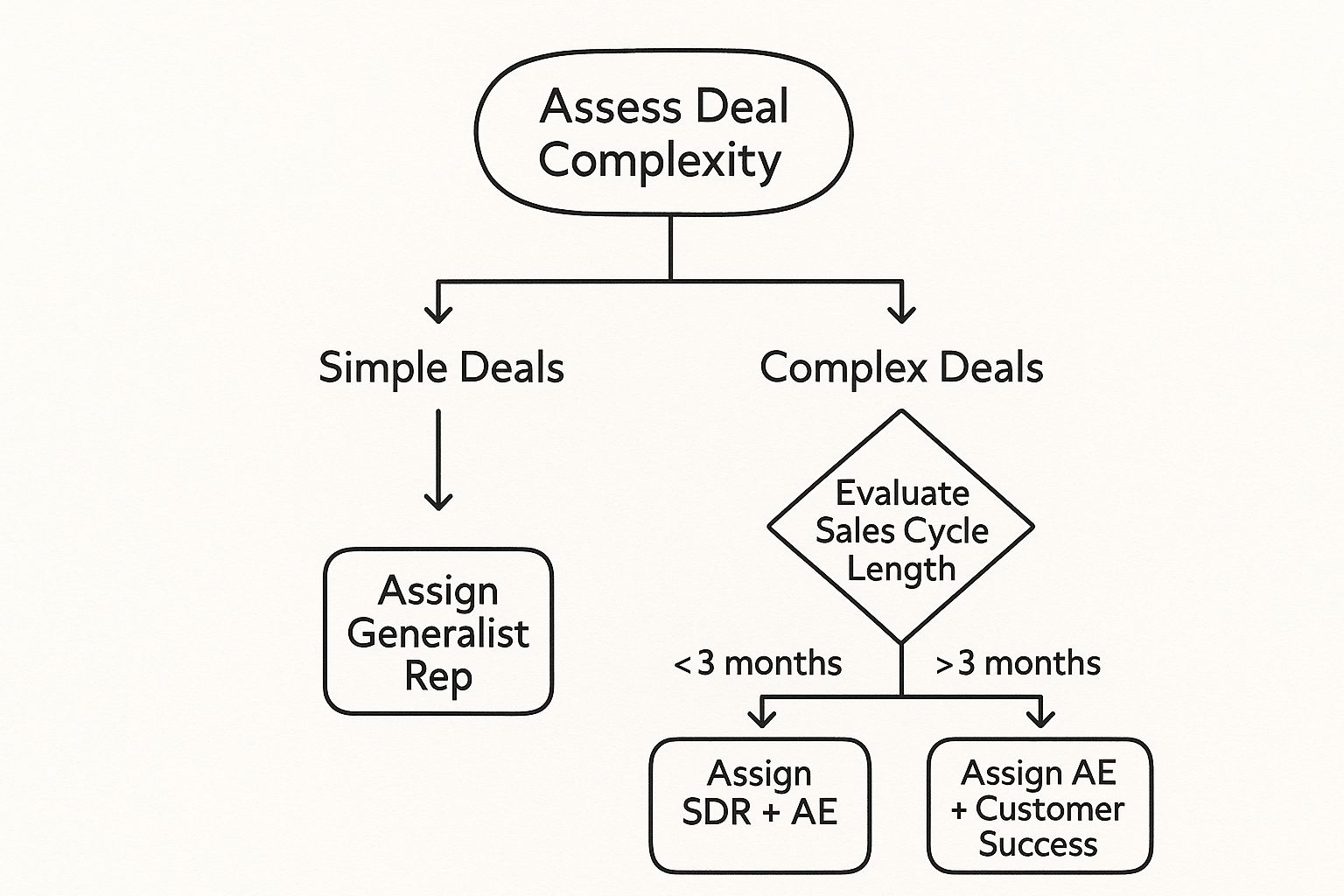
The infographic above visualizes a simplified decision-making process for choosing a sales structure based on deal complexity and sales cycle length.
This visualization highlights a core principle: tailor your structure to your sales motion, not the other way around. Simple deals might only need a generalist rep, while complex, lengthy sales cycles require a coordinated effort between SDRs, Account Executives (AEs), and customer success managers. Understanding your sales process is crucial.
Core Sales Structure Models: A Breakdown
I've seen four core models consistently drive growth. Each has its own strengths and weaknesses, so choosing the right one for your specific situation is key.
-
The Generalist Model: Perfect for startups and businesses with simple products and short sales cycles. Generalist reps handle the entire sales process, from prospecting to closing. This builds strong customer relationships, but can create bottlenecks as your product or sales process becomes more complex.
-
The Specialized Model: Think assembly line efficiency. Each stage of the sales process has a dedicated specialist – Sales Development Representatives (SDRs) for prospecting, AEs for closing, and customer success for onboarding. This works well for complex sales but requires careful coordination. In my experience, clear communication and well-defined roles are essential here.
-
The Territorial Model: This classic structure divides sales teams by geographical regions. It provides local expertise and simplifies logistics but can limit specialization. I've seen this work wonders for businesses with regionally specific products or services, like a company selling agricultural equipment tailored to different climates.
-
The Vertical Model: Organize teams around specific industries. This allows for deep expertise and targeted messaging, but can create conflicts if territories overlap. A software company targeting financial institutions, for example, would have a dedicated team with deep knowledge of that vertical.
To help you visualize the differences, here's a handy table summarizing the key features and best use cases for each model:
Sales Structure Models: Features and Best Use Cases
| Structure Type | Best For | Team Size | Complexity Level | Revenue Impact |
|---|---|---|---|---|
| Generalist | Startups, simple products | Small to Medium | Low | Can be limited by rep capacity |
| Specialized | Complex sales, longer cycles | Medium to Large | High | Potential for significant increase due to efficiency |
| Territorial | Regionally-focused businesses | Varies depending on region | Medium | Improves regional market penetration |
| Vertical | Industry-specific sales | Medium to Large | High | Enables targeted selling and higher deal values |
As you can see, each model brings something unique to the table. Consider your own context and choose wisely.
Picking the Right Model: Key Questions to Ask
There's no "best" model, only the right one for your situation. Choosing hinges on honest answers to these key questions:
- What is your sales cycle like? Quick transaction or a long, consultative process?
- How complex is your product or service? Does it require specialized knowledge?
- What is your target market? Everyone, or specific industries/regions?
- What are your team’s current capabilities? Generalists or specialists?
- What is your growth stage? Startup, mid-market, or enterprise?
These questions force you to look inward at your operations, market, and team. You might be interested in: learning more about sales department structure. This self-assessment is the foundation for a successful restructuring. I've seen companies dramatically improve performance by aligning their structure with their actual needs, not trends.
Avoiding Common Pitfalls
Here are some classic traps I've seen derail even the most talented teams:
- Overcomplicating too early: Don't build a complex structure before you need it. Start simple and add layers as you grow.
- Uneven coverage: Ensure your territories or verticals are balanced regarding opportunity and workload.
- Lack of support for specialization: If you're going vertical, provide the training and resources your reps need to become true experts.
- Ignoring change: Markets evolve, so should your structure. Regularly assess and adjust based on data and market dynamics.
By understanding these models, asking the right questions, and avoiding common pitfalls, you can build a sales team structure optimized for growth. This isn't about organizing boxes on a chart; it's about creating a revenue-generating machine. Remember, the key is aligning your structure with your unique business.
Creating Roles That Eliminate Confusion and Drive Revenue
Generic job descriptions are a recipe for disaster. They're bland, uninspired, and don't truly represent the nuances of your sales process. Imagine a job posting that just says "Sell stuff"—it's not going to draw in top talent. Your roles need to be as thoughtfully designed as your sales strategy, mirroring the customer journey and the activities that actually close deals.
I've talked with many sales leaders who've revitalized their teams by ditching generic descriptions for specific ones. They discovered that well-defined roles, tailored to their specific sales process, are crucial for clarity and revenue growth. One sales director told me about how creating a specialized role for technical sales consultants significantly boosted their closing rate, simply by having a dedicated expert to handle complex technical questions.
Defining Critical Activities and Building Roles Around Them
Before writing job descriptions, dissect your sales process. What are the essential activities that drive deals forward? Think about in-depth product demos, negotiating intricate contracts, or nurturing long-term customer relationships. Pinpoint these key activities, and then structure your roles around them. It's like assembling a pit crew—each member has a specific job vital to overall success.
For example, if your product requires a lot of technical explanation, a Technical Sales Consultant role is a no-brainer. This specialist handles in-depth product questions, freeing up Account Executives to build relationships and close deals. A Customer Lifecycle Manager can nurture existing clients, spotting upsell and cross-sell opportunities a busy AE might miss.
When thinking about your sales structure, consider outsourcing some tasks; you can learn more about how to hire virtual assistants. This allows your core team to focus on high-impact activities.
Writing Role Definitions That Attract Top Talent
Once you've identified the key activities, craft role definitions that excite potential hires. Ditch the corporate jargon and highlight the impact each role has on the company's success. Instead of "responsible for lead generation," try something like "become a deal-making machine, fueling our company's growth by identifying and qualifying high-potential leads." Notice the difference?
Here are some key elements for your role definitions:
- Clear and concise title: Skip vague titles like "Sales Representative." Be specific: "Inbound Sales Specialist," "Enterprise Account Executive," and so on.
- Impactful summary: Show how the role contributes to the company's mission.
- Specific responsibilities: Detail the day-to-day activities, emphasizing the why behind each task.
- Required skills and experience: Be clear about your needs, but don't be afraid to prioritize potential over a long list of qualifications.
- Career progression path: Demonstrate growth potential within the company to attract ambitious candidates.
Creating a Framework for Career Progression
Top performers want to see a future. A clear career progression path keeps your best employees engaged and attracts ambitious new hires. You might be interested in: Check out our guide on sales onboarding plan template.
Think of it like leveling up in a video game—each level brings new challenges and rewards. An SDR might progress to an AE, then a Senior AE, and finally a Sales Manager. Each step should have clear criteria for advancement, fostering purpose and motivation.
Structuring a sales team effectively involves setting realistic quotas and smart compensation plans. Factors like activity focus and market maturity significantly influence quota attainment. SDRs making 12 contact attempts historically perform 16% better than those making the average 8. Yet, only about 68% of SDRs achieve their quotas. This highlights the need for quotas aligned with realistic expectations based on data and market conditions. In 2016, quotas were 27% higher than in 2014, showing the increasing pressure on sales performance. Learn more about sales statistics. By designing roles that reflect your sales process and offering clear paths for growth, you're not just building a team—you're building a revenue-generating machine.
Building a Team That Stays and Delivers
Making a bad hire can feel like hitting the brakes, costing you months of progress. But get onboarding right, and you can transform average performers into sales rockstars. I’ve witnessed this firsthand. I once worked with a company that hired a rep who looked amazing on paper. Turns out, he just wasn't a good fit for their fast-paced, collaborative culture. It was a real setback. On the flip side, I’ve seen another company pour resources into onboarding and mentorship, turning a relatively green rep into their top performer in just a year.
What's the secret sauce that separates teams with revolving doors from those with long-term, high-performing members? It’s not some mystical secret, it's a blend of strategic hiring and thoughtful onboarding. Talking to sales leaders who consistently hit 90%+ retention rates, I’ve picked up some key strategies they use to build winning teams.
Identifying Candidates Who Thrive in Your Unique Environment
Finding the right people begins with truly understanding your own sales team's structure and culture. What are your core values? What kind of personality flourishes in your environment? Is your team highly collaborative, or are individuals more independent? Do you prize quick thinking and adaptability, or is deep product knowledge king? Answering these questions will help you sketch out a profile of your perfect candidate.
Once you have that clear picture, you can build interview processes that dig deeper than surface-level qualifications. Instead of focusing only on past experience, assess candidates' actual sales capabilities. Can they improvise? How do they handle objections? Are they genuinely curious about your customers and their needs?
Onboarding That Sets the Stage for Long-Term Success
Onboarding isn’t just about ticking boxes with paperwork and product training. It's about weaving new hires into your team’s culture and setting them up for quick wins. For a great starting point, check out this piece on how to build an outbound sales team.
A solid onboarding program should include:
- Clear expectations and goals: New hires should know their role, their responsibilities, and how their performance will be measured right from the start.
- Comprehensive product and process training: Equip new reps with the knowledge and tools they need to succeed, including access to your CRM, sales playbooks, and other resources.
- Mentorship and shadowing opportunities: Pairing new hires with seasoned team members provides invaluable guidance, support, and real-world insights. This is essential for building confidence and shortening that learning curve.
- Regular check-ins and feedback: Offer consistent support and tackle any challenges early on. This shows new hires you're invested in their growth.
Mentorship Programs That Actually Work
Effective mentorship isn't just assigning a senior rep to a newbie. It's about building a structured program with defined goals and expectations. Mentors need training on how to provide effective guidance and support. New hires should be encouraged to actively participate in the program. Regular check-ins and feedback sessions are vital for tracking progress and making adjustments.
Creating Early Wins to Build Confidence and Momentum
Early wins, no matter how small, can make a huge difference in a new hire's confidence and motivation. Set achievable goals and celebrate their successes. This positive feedback builds a sense of accomplishment and motivates them to aim higher. One sales leader I know implemented a “First Deal Bonus” program, which significantly boosted team spirit and motivation among new hires.
Tools and Frameworks for Ongoing Development
Building a successful sales team isn't a one-and-done project; it’s an ongoing process. Invest in continuous training and development to keep your team’s skills sharp and relevant. This could include workshops on new sales techniques, access to online courses, or chances to attend industry conferences. Foster a culture of continuous learning, where team members share knowledge and learn from each other.
By using these strategies, you can create a sales team that not only delivers but also stays engaged, motivated, and committed to your company's success. This is how you build a team that lasts.
Using Technology to Amplify Your Team's Impact

Technology should make your sales team more human, not less. But I've seen too many sales leaders get seduced by fancy new tools that overcomplicate things. Instead of boosting performance, these tools often bury reps under mountains of data entry and useless reports, hindering their ability to connect with customers.
Think of it like this: a scalpel is powerful in a surgeon's hands, but dangerous in untrained ones. The same goes for sales technology. A CRM can be a game-changer for managing customer relationships, but a poorly implemented CRM becomes a source of frustration and wasted time.
Choosing the Right Tools for the Job
The key is choosing tools that support your structured sales team, not dictate it. Ask yourself: where are the bottlenecks? Where are reps spending their time, and how can technology free them up to focus on building relationships and closing deals?
If lead qualification is a struggle, maybe an AI-powered lead scoring tool is the answer. If admin tasks are bogging them down, automating email sequences or proposal generation can help. For teams using multi-channel outreach, integrating platforms to manage social media, email, and other communication channels can boost efficiency.
Sales team structure and performance are significantly influenced by technology and multi-channel outreach. Blending in-person interactions with digital approaches is crucial. For instance, 72% of reps use social media for prospecting, while platforms like LinkedIn and industry events remain vital. Integrating CRM software and even AI tools can empower remote teams and boost negotiation skills, especially in high-stakes deals. Discover more insights about sales statistics and technology adoption.
Measuring Tech ROI Beyond Feature Adoption
Just having a tool isn't enough. You need to see its impact on your bottom line. Forget just tracking feature adoption. Focus on the metrics that matter:
- Increased conversion rates: Are you closing more deals?
- Shorter sales cycles: Is your process faster?
- Improved customer satisfaction: Are your customers happier?
- Higher revenue per rep: Are your reps selling more effectively?
Technology as a Humanizing Force
The best sales technology empowers your team to build stronger relationships, personalize communication, and provide more value. I've seen teams use AI to analyze customer data, tailoring their outreach and anticipating needs with impressive accuracy. This personalized approach built stronger relationships and led to more closed deals. These teams weren't replaced by robots; they were empowered to be better salespeople.
Choose the right tools, measure their impact, and focus on technology's humanizing potential. You can transform your sales team from reactive order-takers into proactive relationship builders. That's how you amplify their impact.
Measuring What Matters Without Micromanaging
Tracking the wrong metrics can absolutely kill a sales team’s motivation. I’ve seen it firsthand – a team laser-focused on activity metrics like calls and emails, but totally ignoring the quality of those interactions. The result? Burned-out reps, frustration all around, and a ton of wasted energy.
The real secret to predictable growth is focusing on the performance indicators that actually predict success. This isn't about Big Brother watching every move; it's about using data to empower your team, find coaching opportunities, and celebrate the wins.
Key Performance Indicators (KPIs) That Drive Revenue
So, what should you be measuring? Well, it varies depending on your particular sales team structure and goals. But here are a few KPIs that always seem to deliver valuable insights:
- Lead Conversion Rate: How many leads become opportunities? This shows you how effective your top-of-funnel activities really are.
- Opportunity Win Rate: What percentage of opportunities close as deals? This reveals the strength of your sales process and closing techniques.
- Average Deal Size: Are you closing bigger deals over time? This reflects your ability to upsell and cross-sell.
- Sales Cycle Length: How long does it take to close a deal? A shorter sales cycle translates directly to faster revenue.
- Customer Lifetime Value (CLTV): How much revenue does a customer generate throughout their relationship with you? This highlights the importance of customer retention and long-term growth.
Building Dashboards That Drive the Right Behaviors
Dashboards shouldn't just be a record of activity; they should encourage the right behaviors. Instead of just showing the number of calls made, highlight the percentage that resulted in qualified leads. Instead of just tracking emails sent, focus on open and click-through rates. This subtle shift encourages reps to prioritize quality over quantity.
Performance Conversations That Inspire Improvement
Performance reviews shouldn’t feel like an interrogation. They should be chances for growth and development. Focus on coaching and mentorship, not just criticism. Ask your reps about their challenges and how you can help. Celebrate their successes and help them learn from any missteps. For some great tips on building a positive team environment, check out this guide on motivating a remote sales team.
Data-Driven Coaching and Accountability
The best teams use data to identify coaching opportunities early. If a rep’s lead conversion rate is low, maybe they need help with prospecting or qualification. If their win rate is slipping, it might be time to refresh their closing techniques. This proactive approach helps reps improve before small problems become big ones.
Accountability Without the Pressure Cooker
Accountability doesn't have to be a negative thing. It can actually be really supportive. Create a system where reps feel comfortable sharing their struggles and asking for support. Set clear expectations, provide regular feedback, and celebrate wins – big and small. When accountability feels like a team effort, everyone benefits.
Making Structural Adjustments Based on Performance Data
Sometimes, performance issues aren’t about individual reps at all; they're about the structure itself. If a particular territory consistently underperforms, you might need to redraw the boundaries. If a specific industry vertical isn't generating the expected revenue, it could be a sign that your team needs different expertise. Don't be afraid to make structural adjustments based on what the data is telling you.
I’ve seen companies completely transform their results with smart adjustments. One company I worked with switched from a territorial to a vertical sales model after realizing certain industries were way more profitable. This one change unlocked huge growth potential. By focusing on the right metrics, using data to drive behavior, and building a culture of supportive accountability, you can build a sales team that consistently crushes its targets. This isn't micromanaging; it's empowering your team to be their best.
Your Blueprint for Sales Team Success
Revamping your sales team structure isn't a quick fix; it's a process. Think of it like remodeling your kitchen – you wouldn’t demolish everything at once. You need a plan, a timeline, and a strategy to manage the inevitable disruption. This section is your guide to smoothly implementing everything we’ve discussed, ensuring a seamless transition and maximum impact.
Assessing Your Current Landscape
Before you change anything, honestly evaluate your current situation. A realistic assessment is key. I once worked with a company convinced they needed a specialized sales team. After analyzing their data, it turned out their straightforward product and short sales cycle were ideal for a generalist approach. They saved significant time and resources by avoiding an unnecessary restructure. Here's a checklist to guide your evaluation:
- Current Sales Structure: Which model are you currently using (generalist, specialized, territorial, vertical)?
- Team Size and Capabilities: Are the right people in the right roles?
- Sales Process: Is your process clearly defined and documented?
- Technology: Are you using the right tools to empower your team? Are you using a CRM like Hubspot?
- Key Metrics: What are you tracking, and are these the right metrics to measure success?
Building Your Implementation Roadmap
With a clear understanding of your current situation, you can start planning your implementation. This isn’t about rigid steps; it’s about creating a flexible roadmap. Here’s a general framework:
- Define Clear Objectives: What do you want to achieve with this change? Increased revenue? Shorter sales cycles? Improved customer retention?
- Choose Your Sales Structure Model: Based on your assessment, which model aligns best with your needs and goals?
- Define Roles and Responsibilities: Craft clear job descriptions that emphasize the impact of each role.
- Hiring and Onboarding: Design a thorough onboarding program to set new hires up for success.
- Technology Implementation: Select and implement tools that will support your new structure and empower your team to sell.
- Metrics and Reporting: Determine key metrics and create dashboards to track progress.
- Ongoing Evaluation and Adjustment: Regularly review your structure and adapt based on performance data and market feedback.
Setting Realistic Timelines and Managing Expectations
Restructuring a sales team takes time. Rushing the process almost always backfires. Realistic timelines are essential. A complete overhaul might take several months, while minor adjustments could take just a few weeks. Keep your team informed throughout the process to minimize uncertainty and maintain momentum.
For a deeper dive into measuring the right metrics, check out this resource on measuring operational efficiency. This will help you focus on the metrics that truly drive results.
This screenshot from Wikipedia’s Sales Management page highlights the key processes involved, from planning and budgeting to forecasting and controlling.
This underscores the interconnected nature of sales management. Implementing a new structure requires considering how each component interacts and how your new approach will affect each area.
Managing Change and Building Buy-In
Change can be unsettling. Open communication is essential. Keep your team informed throughout the process, explaining the why behind the restructure and how it benefits them. Proactively address concerns. When everyone understands the rationale and how it contributes to overall success, buy-in becomes much easier.
Celebrating Wins and Learning From Setbacks
Implementing a new sales team structure is a journey. There will be challenges. Celebrate the victories, learn from the setbacks, and remain adaptable. The goal is to build a sales team that consistently exceeds targets while fostering a positive culture that attracts top talent.
Ready to build a top-tier remote sales team? AboutHire connects you with exceptional sales talent from Latin America and Europe, offering a cost-effective and efficient hiring solution. Learn more about how AboutHire can help you achieve your sales goals.